
If your doctor has told you that a lung transplant may be necessary, one of the first questions you are likely to ask is: Will I need one lung replaced or both? This is one of the most important decisions in the entire transplant process, and the answer depends on your specific lung disease, your overall health, and factors your transplant team will carefully evaluate.
Understanding the difference between a single lung transplant and a double lung transplant and which conditions typically call for each, can help you have a more informed conversation with your lung transplant specialist.
What is a Lung Transplant?
A lung transplant is a surgical procedure in which one or both of your diseased lungs are replaced with healthy donor lungs. It is considered when all other treatments have stopped working, and your lung disease has progressed to end-stage.
Lung transplantation can significantly improve your quality of life and, for many patients, extend survival. It is not a cure, but it gives your body a fresh start with lungs that can actually breathe.
What is a Single Lung Transplant?
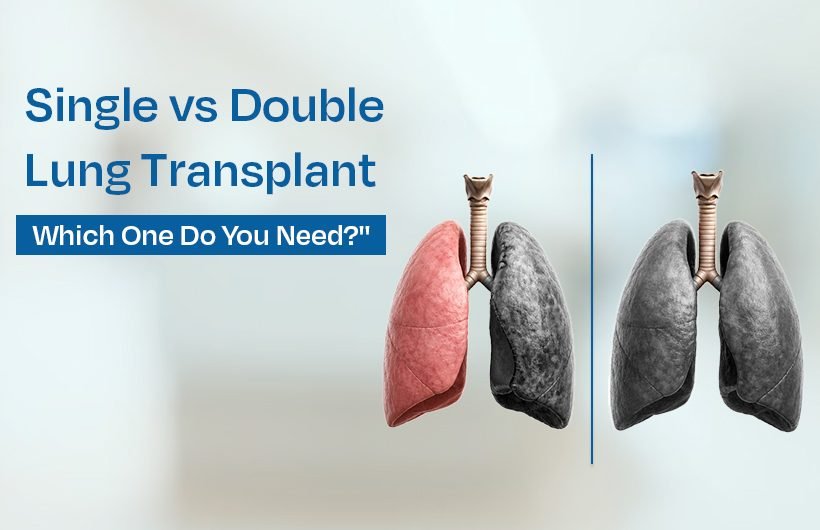
A single lung transplant (SLT) is a procedure where one diseased lung is removed and replaced with a healthy donor lung. Even if that remaining lung is partially damaged, it continues to contribute to your breathing alongside the new donor lung.
SLT is typically a shorter surgery with a slightly faster recovery, and one donor pair of lungs can benefit two separate patients—one receiving each lung. This makes it a valuable option when organ availability is limited.
What is a Double Lung Transplant?
A double lung transplant is also called a bilateral lung transplant (BLT) or sequential single lung transplant—it replaces both lungs during the same surgical procedure. Both diseased lungs are removed and replaced with two donor lungs from the same donor.
It is a more complex surgery that typically takes longer in the operating room and requires a longer initial hospital stay. However, for many patients, it offers more lung reserve and better long-term breathing capacity.
Different Between Single vs Double Lung Transplant
| Factor | Single Lung Transplant | Double Lung Transplant |
| Lungs replaced | One | Both |
| Surgery duration | Shorter | Longer |
| Hospital stay | Generally shorter | Generally longer |
| Lung reserve post-op | Limited | Greater |
| Long-term lung function (FEV1) | Lower | Higher |
| Risk of rejection (BOS) | Higher | Lower |
| Donor organ use | One lung per patient | Both lungs to one patient |
| Best suited for | COPD, IPF (select cases), older/frailer patients | Cystic fibrosis, bronchiectasis, pulmonary hypertension, younger patients |
Which Conditions Typically Need a Single Lung Transplant?
A single lung transplant is generally considered when the disease is primarily affecting one lung more severely or when the remaining native lung can still contribute meaningfully to breathing. Common conditions include:
- Chronic Obstructive Pulmonary Disease (COPD) / Emphysema—particularly in older patients, where the native lung is not severely hyperinflated
- Idiopathic Pulmonary Fibrosis (IPF) — in select cases where surgical risk is a concern
- Alpha-1 antitrypsin deficiency — in specific situations, assessed by the transplant team
- Older patients (typically above 60–65) who may not tolerate the longer, more demanding bilateral procedure
It is important to note that even for conditions like COPD and IPF, both single and double lung transplant are performed, and the decision is made individually for each patient.
Which Conditions Typically Need a Double Lung Transplant?
A double lung transplant is often required when leaving one diseased lung in place could cause ongoing infection, complications, or very poor function. Conditions that commonly call for bilateral transplantation include:
- Cystic fibrosis — because leaving an infected native lung would continuously contaminate the new lung
- Bronchiectasis—for the same reason as cystic fibrosis, both lungs must be replaced
- Pulmonary hypertension (including idiopathic pulmonary arterial hypertension)—a single lung transplant is generally not recommended as it does not adequately address pressure changes across both lungs
- Severe emphysema in younger patients — where bilateral transplant offers better long-term survival
- Re-transplantation — when a previously transplanted lung has failed
What Does the Research Say About Survival?
This is a question almost every patient and family member asks. Here is what the data shows:
Short-term (30 days and 1 year)
Studies show no significant difference in survival between single and double lung transplants at 30 days or one year. Both procedures carry comparable early outcomes when performed in appropriate candidates.
Long-term (5 years and beyond)
At five years, double lung transplant recipients show better survival in most studies. Research from the Scientific Registry of Transplant Recipients analysing nearly 10,000 patients found 19% better five-year survival with bilateral transplantation compared to single lung transplantation in older adults.
For COPD patients, a 2024 meta-analysis found that five-year survival was also higher in DLT recipients. Lung function, as measured by FEV1, tends to be better and more stable after bilateral transplant.
That said, long-term survival is only one part of the equation. Recovery time, surgical risk, organ availability, and your individual condition all matter just as much. You should also understand the cost of a lung transplant in Ahmedabad before making a final decision.
What Factors Does Your Transplant Team Consider?
Choosing between a single and double lung transplant is never a simple formula. Your transplant team will look at:
- Your underlying lung disease: Cystic fibrosis and bronchiectasis almost always require bilateral transplant. COPD and IPF may be treated with either, depending on individual factors.
- Your age and overall fitness: Younger, fitter patients are generally better candidates for the more demanding bilateral procedure.
- Lung allocation score (LAS): A measure of disease severity that also influences the transplant decision.
- Pulmonary perfusion split: If one native lung has significantly better blood flow than the other, a single lung transplant to the more damaged side may be considered.
- Presence of infection: Active infection in both lungs (as in cystic fibrosis) makes bilateral transplant necessary.
- Heart and kidney function: Other organ health affects which surgery is safer for you.
- Pulmonary hypertension: Elevated lung pressures often require bilateral transplant to achieve adequate pressure relief.
What to Expect from Recovery
Single Lung Transplant Recovery
After a single lung transplant, most patients stay in the hospital for about two weeks, but this can be different for each person. The chances of early problems are usually lower. After leaving the hospital, recovery continues with breathing exercises, medicines to prevent rejection, and regular doctor checkups.
Double Lung Transplant Recovery
After a double lung transplant, patients usually stay in the hospital a little longer, often around 18 days or more. The surgery is more complex, so early recovery can be tougher. However, patients who recover well often have better breathing and a lower chance of long-term lung problems in the future.
Important for Both
In both types of transplant, patients need to take medicines for life to prevent rejection. Regular follow-ups, lung tests, and careful monitoring are very important to stay healthy.
Talk to Your Transplant Specialist
Choosing between a single lung transplant and a double lung transplant is a very important decision. It is not based on just one test or a general rule. Doctors look at your full health condition, how serious your disease is, how other organs are working, and what option will give you a better quality of life.
If you or your loved one has serious lung disease and is thinking about a transplant, the first step is to talk in detail with your doctor. Every patient is different, so the right treatment depends on your personal condition.
Dr. Rushi Desai is a specialist in lung diseases, lung transplant, pulmonary hypertension, and interstitial lung disease in Ahmedabad. If you have questions or want to understand your options, you can consult the best lung transplant specialist in Ahmedabad and discuss your case directly.
Medical Disclaimer: This article is for informational purposes only and does not constitute medical advice. Treatment decisions should always be made in consultation with a qualified transplant specialist based on your individual clinical condition.
FAQs
Can I choose between a single and double lung transplant?
Sometimes you can discuss it with your doctor. But in some conditions, a double lung transplant is required for safety and better results.
Is a double lung transplant always better?
No, not always. A double transplant may give better long term results, but a single transplant can be safer for some patients. The right choice depends on your condition.
What happens to the native lung in a single transplant?
The remaining lung continues to work with the new lung. In some cases, it may affect breathing over time, and doctors consider this before surgery.
How long is the wait for a lung transplant in India?
The waiting time is different for each patient. It depends on factors like blood type, disease severity, and donor availability.