
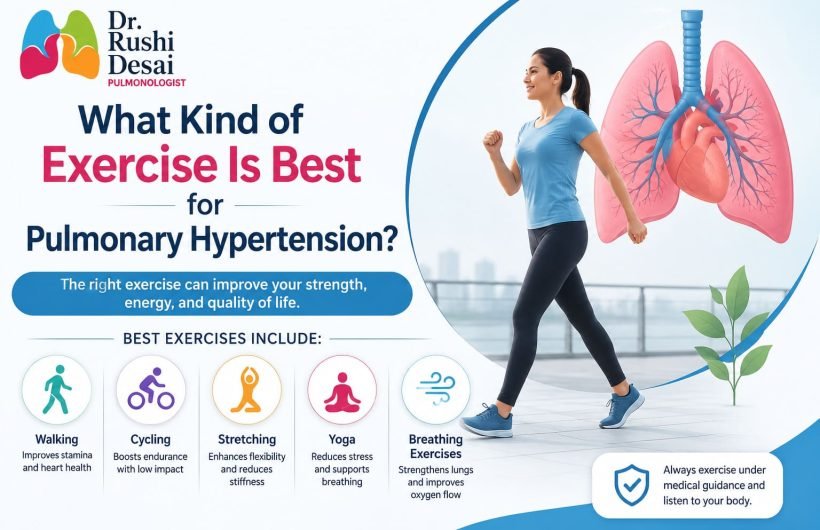
For most people with pulmonary hypertension (PH), low-to-moderate intensity aerobic exercise — such as walking, stationary cycling, and supervised pulmonary rehabilitation — is the safest and most effective way to stay active. These activities improve circulation and oxygen use without putting sudden, heavy strain on the heart and lungs. High-intensity workouts, heavy weightlifting, and breath-holding exercises are generally best avoided.
That said, every patient’s lung and heart respond differently to physical activity, which is why an exercise plan should always be reviewed by a specialist first. If you’re searching for the Best Pulmonologist in Ahmedabad to help you build a safe, personalized activity plan, Dr Rushi Desai works closely with PH patients to match exercise intensity to each person’s lung function and heart capacity.
Understanding Pulmonary Hypertension and Exercise
Pulmonary hypertension is high blood pressure in the arteries that carry blood from the heart to the lungs. Over time, this raised pressure forces the right side of the heart to work harder, which can lead to fatigue, breathlessness, and reduced stamina during daily activities.
This naturally raises an important question: is exercise even safe with this condition? For most stable patients, the answer is yes. Research on pulmonary hypertension and exercise consistently shows that carefully dosed physical activity — done at the right intensity and under medical guidance — can improve exercise tolerance, oxygen efficiency, and quality of life. The key word here is “carefully.” Unsupervised, high-intensity activity can do more harm than good, while the right kind of movement can meaningfully support heart and lung function over time.
How Exercise Helps People With Pulmonary Hypertension
Exercise doesn’t cure pulmonary hypertension, but it plays a supportive role in managing the condition day to day. When done at the correct intensity, physical activity helps in several specific ways:
- Improves oxygen delivery – Regular movement trains muscles to use oxygen more efficiently, easing the workload on the heart and lungs.
- Increases walking distance and stamina – Many patients see measurable improvement in how far they can walk without breathlessness (often tracked using a six-minute walk test).
- Reduces deconditioning – Long periods of inactivity weaken muscles, which can make breathlessness feel worse. Gentle, consistent movement helps prevent this cycle.
- Supports a healthy body weight – Carrying extra weight increases the workload on an already strained heart, so maintaining a healthy weight through safe activity matters.
- Improves mental well-being – Living with a chronic lung condition can be stressful. Light physical activity is linked to reduced anxiety and better mood regulation.
Pulmonary Hypertension Physical Exercise: Best Types to Try
Not all exercise is created equal when you’re managing pulmonary hypertension. The goal is steady, low-impact movement that raises your heart rate gently — not sharply.
1. Low-Impact Aerobic Activity
Walking, stationary cycling, and water-based exercises (like gentle pool walking) are usually the safest starting points. They build endurance gradually without sudden spikes in heart rate or blood pressure.
2. Supervised Pulmonary Rehabilitation
A structured Pulmonary Hypertension rehabilitation program — guided by a pulmonologist or respiratory therapist — combines monitored exercise with oxygen tracking and breathing techniques. This is often the safest way to begin, especially for patients who haven’t exercised in a while or have moderate-to-severe symptoms.
3. Breathing Exercises
Diaphragmatic (belly) breathing and pursed-lip breathing help control breathlessness during activity and improve oxygen exchange. These are often taught alongside physical activity, not as a replacement for it.
4. Light Resistance Training
Using light resistance bands or very light weights, with proper breathing technique (never holding your breath while straining), can help maintain muscle strength without overworking the heart.
Exercises to Avoid With Pulmonary Hypertension
Just as important as knowing what to do is knowing what to avoid. The following types of activity can place sudden, excessive strain on the heart and lungs and are generally discouraged:
- Heavy weightlifting or isometric exercises that involve straining and breath-holding
- High-intensity interval training (HIIT) or sprinting
- Competitive or contact sports with sudden bursts of exertion
- Exercising at high altitude or in extreme heat or cold
- Any activity that causes chest pain, fainting, or severe breathlessness
Safety Tips When Exercising With Pulmonary Hypertension
Safety should always come before intensity. Pulmonologists like Dr Rushi Desai typically recommend the following precautions before and during any activity plan:
- Get cleared first. Always start a new exercise routine only after a specialist has reviewed your current heart and lung function.
- Warm up and cool down gradually. Sudden starts and stops put unnecessary stress on the heart.
- Watch your oxygen levels. If you use supplemental oxygen, use it as prescribed during activity, and consider a pulse oximeter to monitor saturation.
- Stop at warning signs. Dizziness, chest pain, unusual breathlessness, or a racing heartbeat means it’s time to stop and rest immediately.
- Stay consistent, not intense. Short, regular sessions are safer and more effective than occasional intense workouts.
- Avoid exercising when unwell. Skip activity during infections, fever, or flare-ups, and resume only once symptoms settle.
- Stay hydrated and avoid extreme temperatures, which can place added strain on circulation.
Conclusion
Exercise plays a powerful role in managing pulmonary hypertension when done the right way. Gentle, supervised aerobic activity paired with proper breathing techniques can improve oxygen flow, ease symptoms, and support heart and lung health. Every patient’s exercise capacity is different, so the right plan should always be personalized. Speak with your pulmonologist before starting or changing any exercise routine to keep your activity safe.
FAQ’S
What exercise makes your lungs stronger?
Walking, swimming, and cycling, combined with breathing exercises like diaphragmatic and pursed-lip breathing, are generally the most effective for building lung strength gradually and safely.
What exercise is not good for pulmonary hypertension?
Heavy weightlifting, breath-holding exercises, high-intensity interval training, and competitive sports with sudden bursts of effort are not recommended, as they can place sudden strain on the heart and lungs.
What are the breathing exercises for pulmonary hypertension?
Diaphragmatic (belly) breathing and pursed-lip breathing are commonly recommended. Both techniques help slow the breathing rate and improve oxygen exchange, especially during physical activity.
Can running help pulmonary hypertension?
Running is usually too high-intensity for most people with pulmonary hypertension and is not commonly recommended. Walking is generally a safer alternative that offers similar cardiovascular benefits with much less strain.
What is the best time of day to exercise?
There’s no single “best” time for everyone — what matters most is consistency. Many patients find mornings work well, when energy levels tend to be higher, but extreme heat later in the day should generally be avoided.
Ready to Build a Safe Exercise Plan for Your Lungs?
Living with pulmonary hypertension doesn’t mean giving up on movement — it means moving smarter. Consult Dr Rushi Desai today to get a personalized exercise and lifestyle plan built around your specific heart and lung health.
Medical Disclaimer:- This article is for general educational purposes and does not replace personalized medical advice. Always consult a qualified pulmonologist before starting any new exercise program.