
If you or someone in your family is dealing with a persistent cough, wheezing, or shortness of breath, one question often comes up: is this asthma or COPD? The two conditions share many symptoms, which makes them easy to confuse. But they are not the same disease, and treating one like the other can do more harm than good.
This article explains the key differences between asthma and COPD, where they overlap, what the link between them looks like, and when you should see a pulmonologist.
What Is Asthma?
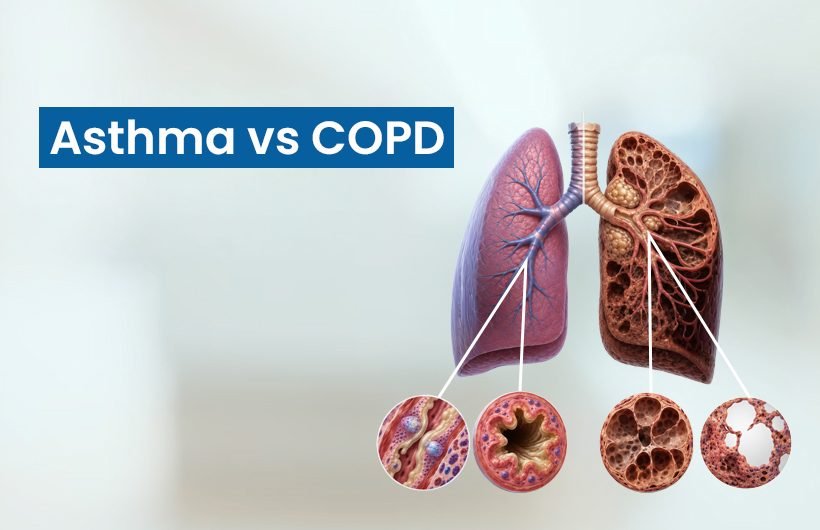
Asthma is a chronic condition where the airways in your lungs become inflamed and narrow. This makes breathing difficult. The key feature of asthma is that symptoms come and go. Between episodes, many people breathe normally.
With the right diagnosis and treatment, most people with asthma can lead a completely normal, active life.
Who Gets Asthma?
Asthma can start at any age, but it most commonly begins in childhood. You are more likely to develop asthma if you have:
- A family history of asthma or allergies
- Eczema or allergic rhinitis (hay fever)
- Early exposure to cigarette smoke, dust, or air pollution
- Frequent respiratory infections as a child
What Triggers Asthma?
Asthma symptoms are set off by triggers. Common triggers include:
- Pollen, dust mites, mould, or pet dander
- Cold or dry air
- Exercise
- Respiratory infections like colds or flu
- Strong chemical smells or fumes
- Stress
Identifying your personal triggers is an important part of managing asthma well.
What Is COPD?
COPD stands for Chronic Obstructive Pulmonary Disease. It is a long-term lung condition where the airways and air sacs in the lungs become permanently damaged. Unlike asthma, this damage does not reverse. COPD gets worse over time if left unmanaged.
COPD is an umbrella term for two related conditions. Chronic bronchitis means the airways are constantly inflamed and produce excess mucus. Emphysema means the tiny air sacs in the lungs lose their elasticity and get destroyed.
Many people with COPD have features of both.
Who Gets COPD?
COPD usually develops in people over the age of 40. It is strongly associated with:
- Long-term smoking (the leading cause globally)
- Exposure to biomass smoke from indoor cooking fires (very common in India)
- Occupational dust and chemical exposure (construction, farming, mining)
- Long-term air pollution exposure
- A rare genetic condition called Alpha-1 Antitrypsin Deficiency
India carries a disproportionate share of the global COPD burden. According to published data, India has an estimated 37.8 million COPD cases and contributes to 27.3% of global COPD deaths, far more than its share of the global population.
Asthma vs COPD: Key Differences at a Glance
Here is a clear comparison of the two conditions to help you understand the main differences:
| Feature | Asthma | COPD |
| Who it affects | Children, young adults (any age) | Adults over 40, smokers |
| Main cause | Allergens, genetics, triggers | Long-term smoking, pollution, dust |
| Airflow blockage | Reversible with treatment | Largely permanent, does not fully reverse |
| Symptoms between episodes | Normal breathing between attacks | Constant breathlessness, worsens over time |
| Progression | Stable with good control | Slowly gets worse without management |
| Common triggers | Pollen, dust, cold air, exercise | Infections, exertion, air pollutants |
| Spirometry result | Normal between attacks | Persistently reduced, even after inhaler |
| Reversibility on bronchodilator | Significant improvement | Little or no improvement |
The most critical difference: asthma is largely reversible. COPD is not. That single distinction changes everything about how each condition is managed.
Asthma and COPD Symptoms: Where They Overlap
Both conditions share these common symptoms:
- Chronic cough
- Wheezing (a whistling or squeaky sound when you breathe)
- Shortness of breath, especially during physical activity
- Chest tightness
Because of this overlap, many patients are misdiagnosed or spend years on the wrong treatment. Here are some clues to help tell them apart:
Think asthma if: symptoms started in childhood, come and go with identifiable triggers, and improve significantly after using a reliever inhaler.
Think COPD if: you are over 40, have a long smoking history or significant smoke exposure, and your breathlessness is getting steadily worse regardless of any obvious trigger.
Think COPD if: your morning cough produces a lot of thick mucus regularly.
Think asthma if: you wake up at night with coughing or chest tightness. That said, you cannot self-diagnose either condition. Only a spirometry test performed by a pulmonologist can confirm which condition you have.
Is There a Link Between Asthma and COPD?
Yes. And this is something many patients do not know about.
There is a recognised condition called Asthma-COPD Overlap, commonly abbreviated as ACO. A person with ACO has features of both diseases at the same time. This is more common than people realise. Research shows that asthma coexists in approximately 27% of patients with COPD.
The 2025 GINA (Global Initiative for Asthma) report and the 2025 GOLD (Global Initiative for Chronic Obstructive Lung Disease) report both acknowledge that asthma and COPD are separate conditions that can coexist in the same patient.
Who Is at Risk of Asthma-COPD Overlap?
- People who were diagnosed with asthma in childhood and later became heavy smokers
- Older adults (55 and above) with a long history of respiratory problems
- Patients whose symptoms do not respond fully to standard asthma or COPD treatment
- Individuals with significant, long-term exposure to both allergens and smoking or pollution
Why Does ACO Matter?
Patients with Asthma-COPD Overlap tend to have worse outcomes than those with either condition alone. They experience more frequent and severe flare-ups, are hospitalised more often, and have a lower quality of life overall.
Treatment for ACO needs to be carefully tailored. A standard COPD plan may not be appropriate for someone who also has asthma. The 2025 GOLD guidelines recommend managing ACO primarily using asthma treatment guidelines as the starting point.
This is exactly why seeing an experienced pulmonologist matters so much. Getting the right diagnosis changes the treatment plan, and the right treatment plan changes outcomes.
How Are Asthma and COPD Diagnosed?
Your doctor will take a full history: your age, symptoms, how long you have had them, your smoking history, occupation, and family background. But the definitive test for both conditions is spirometry.
Spirometry is a simple, painless breathing test. You breathe into a device that measures how much air you can blow out and how fast. The results reveal whether there is an obstruction in your airways and whether it reverses after a bronchodilator (reliever) inhaler.
- In asthma: airflow improves significantly after the bronchodilator
- In COPD: airflow remains reduced even after the bronchodilator
- In ACO: there is partial improvement, but not full reversal
Other tests may include a chest X-ray, high-resolution CT scan of the lungs, blood tests for eosinophils and IgE (allergy markers), a FeNO test (to check for airway inflammation), and a 6-minute walk test to assess exercise capacity.
Early spirometry testing is especially important in India, where both COPD and asthma are significantly underdiagnosed. Many patients spend years being treated for the wrong condition.
Asthma vs COPD Treatment: Similar Tools, Different Goals
Both conditions use inhalers as the core of treatment, but the goals are different.
Asthma Treatment
The aim is to control inflammation and prevent attacks. Inhaled corticosteroids (ICS) are the cornerstone. When well managed, many asthma patients need minimal daily medication and can live symptom-free.
- Reliever inhalers (short-acting bronchodilators) for sudden symptoms
- Preventer inhalers (inhaled corticosteroids) for long-term control
- Trigger avoidance and an action plan for flare-ups
COPD Treatment
The aim is to slow progression, reduce symptoms, and prevent exacerbations. COPD cannot be reversed, but it can be managed well.
- Long-acting bronchodilators (LABA and LAMA inhalers) as the first line
- Inhaled corticosteroids added in certain patients with frequent flare-ups
- Pulmonary rehabilitation to improve strength and endurance
- Oxygen therapy for advanced COPD
- Smoking cessation as the single most effective intervention
For patients who also have Interstitial Lung Disease features or Pulmonary Hypertension, additional specialist treatment may be needed alongside standard asthma or COPD care.
Never change or switch your inhalers on your own. What helps one condition can sometimes worsen the other. Always discuss any medication changes with your pulmonologist.
When Should You See a Pulmonologist?
See a specialist if you have any of the following:
- A cough that has lasted more than 3 weeks and will not clear up
- Breathlessness during activities that used to feel easy
- Waking up at night because of chest tightness or coughing
- Diagnosed with asthma but your symptoms keep getting worse despite treatment
- A history of smoking with any new or worsening breathing symptoms
- A family history of lung disease
- Wheezing that comes on suddenly or without a clear reason
Early diagnosis makes a real difference. The longer asthma or COPD goes unrecognised or mismanaged, the more damage accumulates in the lungs. Some of that damage cannot be undone.
Frequently Asked Questions: Asthma vs COPD
Can asthma turn into COPD?
Asthma does not directly turn into COPD. However, people with longstanding, uncontrolled asthma can develop permanent airway changes over time, a process called airway remodelling. If someone with asthma also smokes heavily or has significant pollution exposure, they can develop COPD on top of their asthma. This combination is called Asthma-COPD Overlap (ACO).
What is the main difference between asthma and COPD?
The main difference is reversibility. Asthma causes airway narrowing that opens up with treatment, and symptoms often improve or disappear between episodes. COPD causes permanent lung damage that does not reverse. COPD also tends to start later in life (after 40) and is strongly linked to smoking, while asthma often begins in childhood and is linked to allergies and triggers.
Can you have both asthma and COPD at the same time?
Yes. This is called Asthma-COPD Overlap, or ACO. It is more common than many people realise, with research showing asthma coexists in roughly 27% of COPD patients. People with ACO tend to have more severe symptoms and more frequent hospital admissions than those with either condition alone. Diagnosis and treatment need to be carefully managed by a specialist.
How is asthma diagnosed vs COPD?
Both are diagnosed using a spirometry test, which measures your lung function. In asthma, airflow improves significantly after a bronchodilator inhaler. In COPD, airflow remains reduced even after the inhaler. Your doctor will also consider your age, symptoms, smoking history, and family background. A chest CT scan and other tests may be added for a complete picture.
What is the best doctor for asthma and COPD in Ahmedabad?
A pulmonologist (lung specialist) is the right doctor for both asthma and COPD. In Ahmedabad, Dr. Rushi Desai is a specialist in pulmonology with expertise in asthma, COPD, Asthma-COPD Overlap, pulmonary hypertension, and interstitial lung disease. Early consultation with a pulmonologist leads to faster, more accurate diagnosis and better treatment outcomes.
Can COPD be cured?
No. COPD cannot currently be cured, but it can be very effectively managed. The right combination of inhalers, pulmonary rehabilitation, lifestyle changes, and specialist follow-up can slow progression, reduce flare-ups, and significantly improve quality of life. Stopping smoking, at any stage, is the single most important step to slow COPD progression.
Is shortness of breath always a sign of asthma or COPD?
Not always. Shortness of breath can be caused by many conditions including heart disease, anaemia, pulmonary hypertension, interstitial lung disease, and anxiety. This is why a proper medical evaluation is important. If you have persistent or unexplained breathlessness, see a doctor rather than assuming it is asthma or COPD.
Meet Dr. Rushi Desai
Dr. Rushi Desai is a respiratory medicine specialist with focused expertise in diagnosing and managing asthma, COPD, and Asthma-COPD Overlap. He brings a clear, patient-first approach to every consultation, explaining your condition in plain language, building a treatment plan that suits your lifestyle, and guiding you through every step of your care.
Whether you are newly diagnosed or have been managing a breathing condition for years without clear answers, Dr. Rushi Desai offers the clinical depth and genuine attention that leads to better outcomes.
Book a Consultation with a Pulmonologist Specialist in Ahmedabad
Living with an undiagnosed or poorly managed breathing condition takes a serious toll on your daily life. If you are dealing with chronic cough, worsening breathlessness, wheezing, or chest tightness, you deserve a clear answer and a plan that actually works.
Dr. Rushi Desai is one of Ahmedabad’s leading pulmonologists, with specialist expertise in asthma, COPD, Asthma-COPD Overlap, Interstitial Lung Disease, and Pulmonary Hypertension. His clinic is equipped with advanced spirometry and diagnostic tools to give you a precise diagnosis and a tailored treatment plan.
- Specialist pulmonology care in Ahmedabad
- Advanced lung function testing including spirometry
- Expert management of asthma, COPD, and ACO
- Compassionate, easy-to-understand consultations
Take the first step. Book your consultation today and breathe easier.
Medical Disclaimer: This article is written for informational and educational purposes only. It is not a substitute for professional medical advice, diagnosis, or treatment. Every patient’s condition is unique. The best diagnostic and treatment approach always depends on your individual clinical picture and your treating specialist’s assessment. If you have concerns about your breathing or lung health, please consult a qualified pulmonologist