
You’ve never touched a cigarette in your life. So when a cough hangs around for weeks, you probably don’t think “lung cancer,” you think allergies, or pollution, or maybe you just need to finish that course of antibiotics you skipped. That instinct is understandable, but it isn’t always right. As a lung cancer specialist in Ahmedabad, I see non-smokers with lung cancer regularly, and most of them tell me the same thing: they never thought it could happen to them. If you’re a best pulmonologist in Ahmedabad search away from finding answers, here’s what you actually need to know.
Can Non-Smokers Really Get Lung Cancer?
Yes, and it’s more common than most people assume. In parts of Asia, non-smokers make up roughly 40 to 50 percent of all lung cancer patients, a far higher share than in the West, where smoking dominates the numbers. Women who have never smoked are affected disproportionately compared to men.
This isn’t a fringe statistic. It means that “I don’t smoke” cannot be the reason you rule out a lingering respiratory symptom. It’s one useful piece of context, not a guarantee of safety.
Why Does This Happen If You’ve Never Smoked?
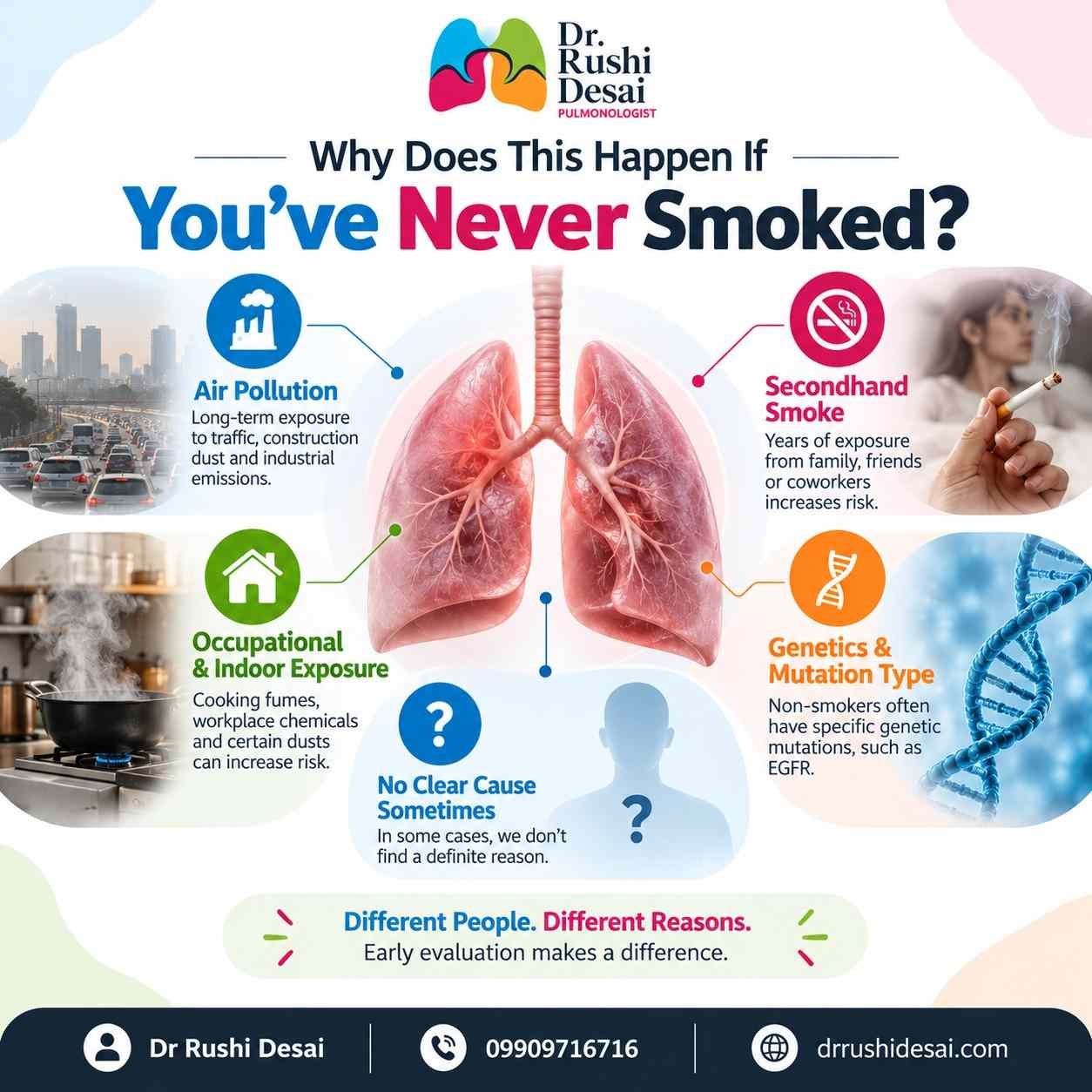
A few factors show up again and again in non-smokers diagnosed with lung cancer:
Air pollution. Long-term exposure to fine particulate matter (PM2.5) is a recognised driver of lung cancer, including in people who have never smoked. Ahmedabad’s air quality, like that of most large Indian cities, puts residents in daily contact with these pollutants: traffic exhaust, construction dust, and industrial emissions all contribute.
Secondhand smoke. Years of exposure to a smoking spouse, parent, or coworker adds up, even if you never lit a cigarette yourself.
Occupational and indoor exposure. Cooking fumes in poorly ventilated kitchens, workplace chemicals, and certain industrial dusts all carry risk.
Genetics and mutation type. Lung cancers in non-smokers are often biologically different from smoking-related cancers. They’re more likely to involve specific genetic mutations, such as EGFR, which matters enormously for treatment. More on that below.
No identifiable cause at all. Sometimes we simply don’t find a clear trigger. That’s frustrating for patients, but it doesn’t change how we approach diagnosis or treatment.
What Symptoms Should Actually Concern You?
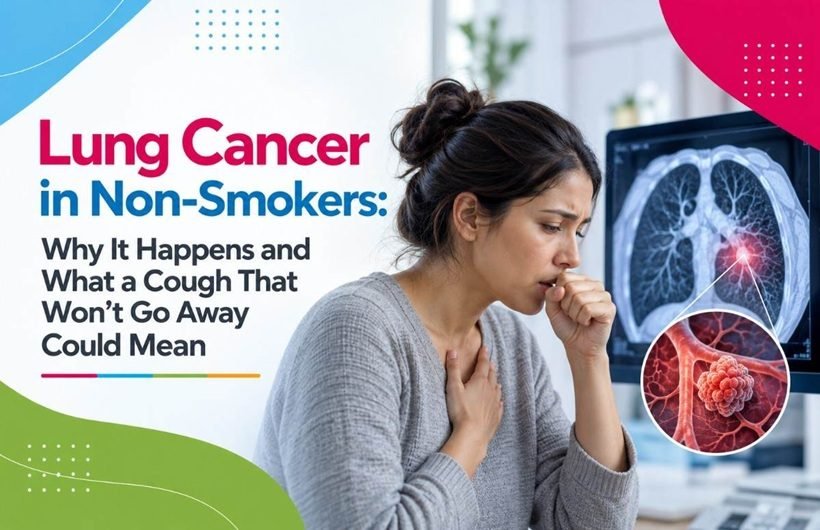
Most coughs are not cancer. Infections, asthma, acid reflux, and post-viral irritation are all far more common explanations, and I’m not writing this to make every cough feel like an emergency. But certain patterns deserve a proper look rather than another round of home remedies:
- A cough lasting more than three weeks, especially if it’s changed in character from a cough you’ve had before
- Coughing up blood, even a small amount. This should never be ignored
- Unexplained weight loss of five kilograms or more
- Chest pain that doesn’t go away
- Breathlessness that’s new or getting worse
- A voice that’s become hoarse for no clear reason
If you’re noticing one or more of these, especially alongside a smoking-free history that’s making you dismiss the possibility, it’s worth getting checked rather than waiting it out.
How Is Lung Cancer in Non-Smokers Diagnosed and Treated?
The diagnostic and treatment path typically follows these steps:
- Initial imaging: A chest X-ray or CT scan to look for anything abnormal.
- Biopsy: If something suspicious turns up, a biopsy confirms the diagnosis. Depending on where the abnormality sits, this might be done through a needle, or through a minimally invasive procedure like EBUS, which lets us sample lymph nodes and masses near the airways without open surgery. If you want more detail on what that procedure actually involves, I’ve written about it separately.
- Molecular testing: Once a diagnosis is confirmed, this becomes especially important for non-smokers. Their cancers more often carry targetable mutations, and identifying the specific genetic driver can open up treatment options.
- Targeted therapies: For the right mutation, these work differently from standard chemotherapy and can be considerably more effective. This is one area where being a non-smoker with lung cancer actually changes the treatment conversation in a meaningful way, and it’s why comprehensive testing at diagnosis matters so much.
- Treatment planning: Plans are built around the cancer’s stage, its genetic profile, and the patient’s overall health. Consultation with Dr. Rushi Desai typically includes a review of imaging, biopsy results, and a clear conversation about what the findings mean before deciding on next steps.
Conclusion
Not smoking lowers your risk of lung cancer, but it doesn’t remove it entirely. Non-smokers make up a significant share of lung cancer patients, and factors like air pollution, secondhand smoke, and genetics all play a role independent of tobacco use. A cough, breathlessness, or any of the warning signs covered above deserve a proper look, especially when they last more than a few weeks. Early evaluation remains the single biggest factor in better outcomes, whether you’ve ever smoked or not.
Pulmonary Function Tests in Ahmedabad
If something’s been nagging at you, don’t wait it out. Contact us to book a consultation with Dr. Rushi Desai and get a clear, honest read on what your symptoms mean.
Frequently Asked Questions
Q: I’ve never smoked and have no family history. Should I still worry about a three-week cough?
A: Not worry, exactly, but don’t dismiss it either. A cough lasting three weeks or more is a reasonable trigger to see a pulmonologist, regardless of smoking history. Most of the time it will be something simpler, but it’s worth ruling out.
Q: Does air pollution alone cause lung cancer, or does it need other risk factors too?
A: Air pollution is an established independent risk factor, but it usually interacts with other factors like genetics and duration of exposure. It’s rarely the sole explanation, but it’s never irrelevant either, especially for long-term city residents.
Q: Is lung cancer in non-smokers more or less treatable than in smokers?
A: It depends heavily on the specific case and stage at diagnosis. Non-smoker lung cancers more often carry targetable genetic mutations, which can open up effective targeted therapies. That’s a genuine advantage in some cases, but early detection still matters more than any other single factor.
Q: What tests will I need if my doctor suspects lung cancer?
A: Usually a chest CT scan first, followed by a biopsy if something abnormal is found. If genetic testing is relevant, that’s done on the biopsy sample itself, so no separate procedure is needed.
Q: Can secondhand smoke exposure from years ago still matter now?
A: Yes. Cumulative exposure over years, even decades earlier, contributes to risk. It doesn’t mean you’ll develop cancer, but it’s part of the fuller picture your doctor will want to know.
This article is for informational purposes only and is not a substitute for professional medical advice, diagnosis, or treatment. Please consult a qualified pulmonologist for concerns specific to your health.