
If your doctor has asked you to get a pulmonary function test, you’re probably wondering what it actually involves, and whether it’s going to hurt. It won’t. A pulmonary function test in Ahmedabad is one of the simplest, safest tests in respiratory medicine, but knowing what to expect makes it far less intimidating. As a best pulmonologist in Ahmedabad treating patients with breathlessness, chronic cough, and diagnosed lung conditions every week, this is one of the most common questions we get before someone’s first visit.
What Is a Pulmonary Function Test?
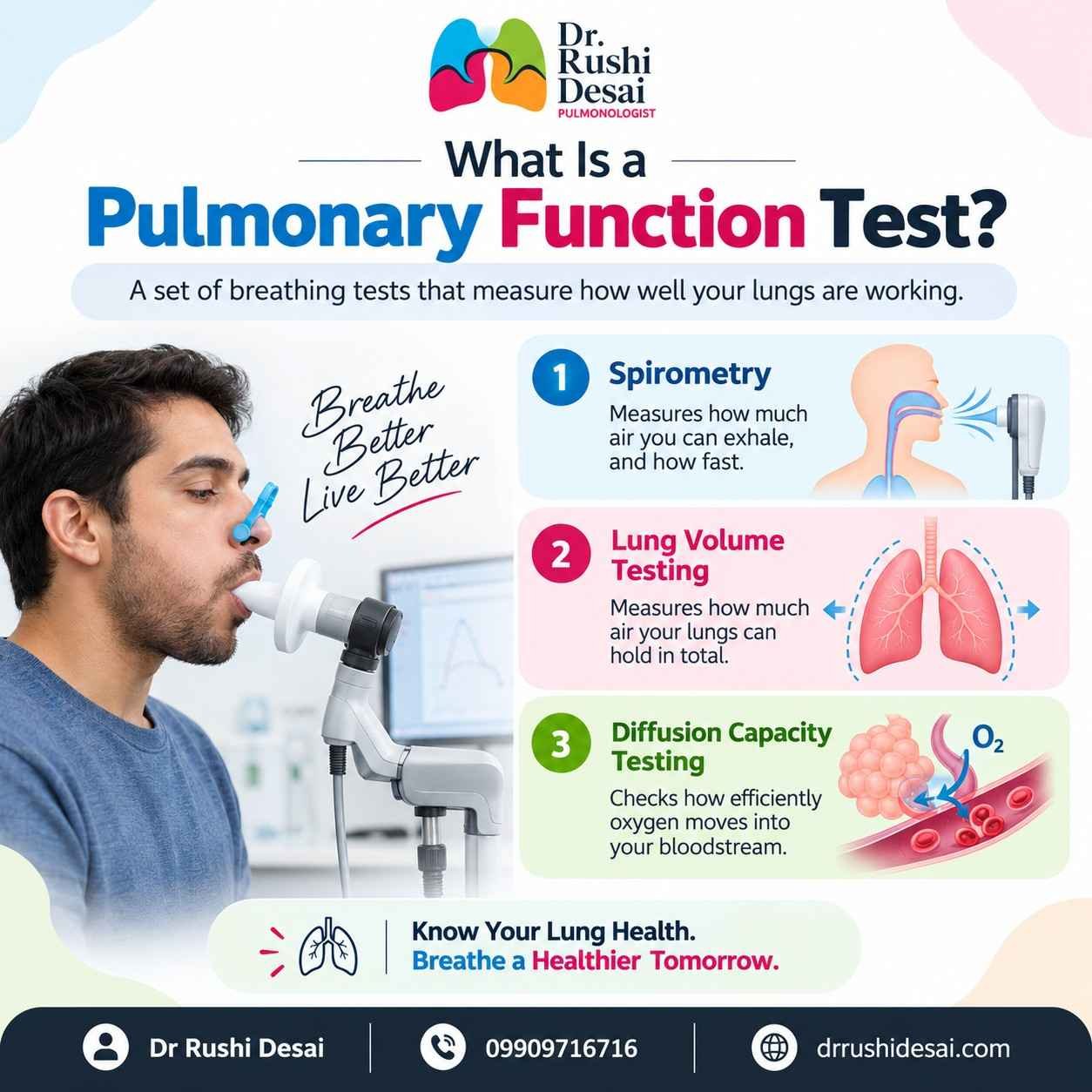
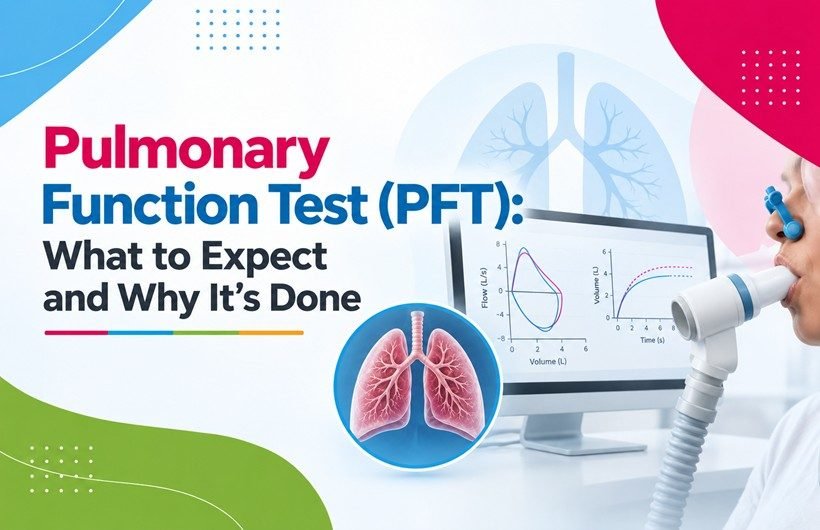
A pulmonary function test, or PFT, is a set of breathing tests that measure how well your lungs are working. It doesn’t just tell us that something is wrong. It tells us what kind of problem it is. Some conditions narrow your airways, making it hard to push air out quickly. Others stiffen or scar the lung tissue, making it hard to take a full, deep breath in. A PFT can tell the two apart, which changes how we treat you.
The test usually includes:
- Spirometry: you breathe forcefully into a mouthpiece to measure how much air you can exhale, and how fast.
- Lung volume testing: measures how much air your lungs can hold in total.
- Diffusion capacity testing: checks how efficiently oxygen moves from your lungs into your bloodstream.
Not everyone needs all three. We choose the combination based on your symptoms and history.
How to Prepare for a Pulmonary Function Test
Preparation is simple, but skipping these steps can throw off your results and mean redoing the test:
- Avoid a heavy meal for at least 2 hours before your appointment.
- Skip caffeine on the day of the test: it can relax your airways and change your numbers.
- Don’t smoke or vape for at least an hour beforehand.
- Wear loose, comfortable clothing that doesn’t restrict your chest or stomach.
- If you use an inhaler, ask us in advance whether to skip your usual dose before the test. Sometimes we need to see your “unmedicated” lung function first.
Bring a list of your current medications and mention any recent chest infections, surgeries, or heart conditions, since these can affect how the test is done.
What Happens During the Test?
You’ll sit in a chair, and a soft clip will be placed on your nose so all your breathing goes through your mouth. You’ll form a tight seal around a mouthpiece connected to a machine that records airflow and volume.
For the main part of the test, you’ll be asked to take the deepest breath you can, then blow out as hard and as fast as possible until your lungs feel completely empty. It’s not comfortable, but it isn’t painful. Most people describe it as tiring rather than unpleasant. You’ll repeat this a few times to make sure the readings are consistent. Depending on which tests are ordered, the full session usually takes 30 to 60 minutes.
If we’re checking your response to a bronchodilator, you’ll be given an inhaler partway through and asked to repeat the breathing maneuvers so we can compare the before-and-after numbers.
Understanding Your Pulmonary Function Test Results
Your results are compared against expected values for your age, height, sex, and ethnicity, then given as a percentage. Broadly:
- Normal range is usually 80% or above of the predicted value.
- Obstructive pattern (airways are narrowed) points toward conditions like asthma or COPD.
- Restrictive pattern (lungs can’t expand fully) can point toward conditions like interstitial lung disease, where the lung tissue itself has become stiff or scarred.
A single number rarely tells the full story on its own. Dr. Rushi Desai reviews your PFT results alongside your symptoms, imaging, and history before explaining what they actually mean for your treatment, not just whether you fall inside or outside a “normal” range.
Conclusion
A pulmonary function test isn’t something to dread. It’s one of the most useful tools we have for finding out exactly what’s happening in your lungs and choosing the right treatment for it. Whether you’re being tested for the first time or tracking a known condition, understanding your numbers puts you back in control of the conversation with your doctor.
Pulmonary Function Tests in Ahmedabad
If you’ve been asked to get a Pulmonary Function Tests, or you’ve had breathlessness or a cough that hasn’t gone away, contact us to book a consultation, or chat with us on WhatsApp to ask questions before your appointment.
Frequently Asked Questions
Is a pulmonary function test painful?
No. It requires effort and can leave you slightly breathless or lightheaded for a moment, but it isn’t painful and has no needles or incisions involved.
How long does it take to get PFT results?
Basic spirometry results are often available the same day. If diffusion capacity or lung volume testing is included, your doctor may take a little longer to review and explain the full picture.
Can I drive myself home after a PFT?
Yes. The test doesn’t involve sedation, so you’re safe to drive or go back to work right after.
Do I need to stop my inhaler before the test?
Sometimes. It depends on what we’re trying to measure. We’ll give you specific instructions in advance. Don’t stop any medication on your own without checking first.
How often should a PFT be repeated?
For a new diagnosis, we usually repeat it a few months after starting treatment to check progress. For stable chronic conditions, once or twice a year is common, but this varies by patient.
Can children have a pulmonary function test?
Yes, though it usually requires a child old enough to follow breathing instructions reliably, generally from around age 5 to 6 onward.