
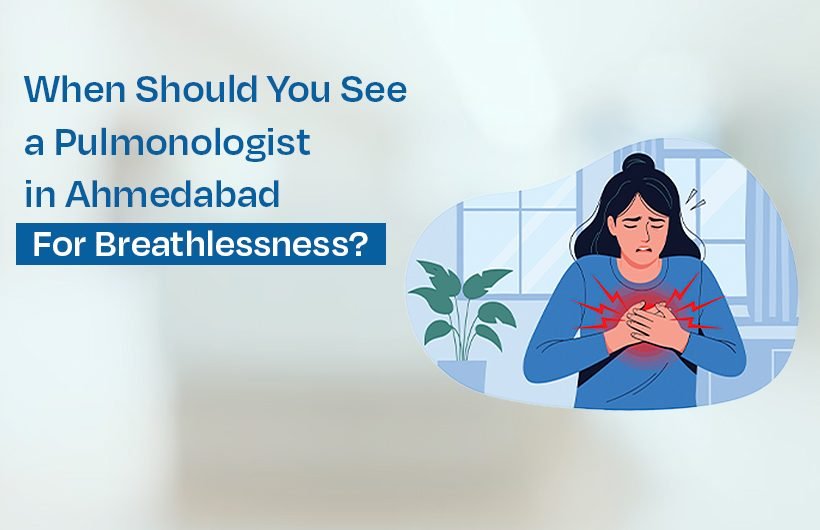
Breathlessness can happen occasionally after exercise or physical activity. However, if you frequently feel short of breath during routine tasks like walking, climbing stairs, or even resting, it may indicate an underlying lung or respiratory condition that requires medical attention.
You should see a pulmonologist if you experience:
- frequent shortness of breath
- wheezing
- chronic cough lasting more than 2–3 weeks
- chest tightness
- difficulty breathing during sleep
- reduced stamina
- recurring lung infections
Early diagnosis and treatment can help prevent serious complications and improve your quality of life.
If you are searching for a pulmonologist in Ahmedabad for breathlessness, consulting an experienced lung specialist can help identify the exact cause and begin the right treatment early.
What Does Breathlessness Mean?
Breathlessness, also known as shortness of breath, occurs when you feel unable to get enough air into your lungs. It can develop suddenly or gradually and may range from mild discomfort to severe breathing difficulty.
While temporary breathlessness can occur due to exertion, persistent symptoms should never be ignored.
Common causes of breathing problems include:
- Asthma
- Chronic Obstructive Pulmonary Disease (COPD)
- Lung infections
- Interstitial Lung Disease (ILD)
- Pulmonary Hypertension
- Allergies
- Smoking-related lung damage
- Anxiety or stress
- Heart-related conditions
In cities like Ahmedabad, increasing pollution, dust exposure, smoking, and post-viral respiratory problems can also contribute to chronic breathing issues.
7 Warning Signs You Should See a Pulmonologist
1. Breathlessness Happens Frequently
If you experience repeated episodes of shortness of breath, especially without heavy activity, it may indicate an underlying respiratory condition that requires evaluation.
2. You Feel Breathless Even at Rest
Difficulty breathing while sitting, resting, or sleeping is not normal and should be assessed immediately by a lung specialist.
3. Persistent Cough Lasts More Than 3 Weeks
A chronic cough may be linked to asthma, COPD, infection, or other lung diseases. Ignoring persistent symptoms can delay diagnosis and treatment.
4. Wheezing or Chest Tightness
Noisy breathing, wheezing, or chest tightness often indicates airway inflammation or obstruction and may require pulmonary evaluation.
5. Breathlessness Affects Daily Activities
If simple activities like walking, talking, climbing stairs, or household work leave you exhausted, your lung function may be reduced.
6. Sudden Shortness of Breath
Sudden breathing difficulty can sometimes indicate a serious medical emergency such as:
- severe asthma attack
- lung infection
- pulmonary embolism
- allergic reaction
Immediate medical care is important in these situations.
7. Other Symptoms Occur Along With Breathlessness
Consult a pulmonologist immediately if you also notice:
- fever
- unexplained weight loss
- fatigue
- swelling in legs
- bluish lips or fingers
- chest pain
These symptoms may indicate advanced respiratory or heart-related conditions.
When to See a Lung Doctor for Asthma or COPD
People already diagnosed with asthma or COPD should consult a pulmonologist regularly, especially if:
- Inhalers are not working effectively
- Symptoms are worsening
- Nighttime breathing problems increase
- attacks become more frequent
Regular monitoring helps prevent complications and improves long-term lung health.
Tests a Pulmonologist May Recommend
To diagnose the cause of breathlessness accurately, a pulmonologist may recommend:
- Pulmonary Function Test (PFT): Measures lung capacity and airflow.
- Chest X-Ray or CT Scan: Helps detect infections, lung damage, or structural abnormalities.
- Oxygen Level Testing: Checks blood oxygen saturation.
- Allergy Testing: Identifies triggers causing respiratory symptoms.
- Sleep Study: Evaluates breathing problems during sleep.
These tests help diagnose conditions such as asthma, COPD, ILD, pulmonary hypertension, and chronic lung infections.
Shortness of Breath Treatment in Ahmedabad
Treatment depends on the underlying cause of the breathing difficulty.
Common treatments include:
Medications
- inhalers
- bronchodilators
- antibiotics
- anti-inflammatory medicines
Oxygen Therapy
Used when oxygen levels become low.
Pulmonary Rehabilitation
Improves breathing capacity through supervised exercise and breathing techniques.
Lifestyle Changes
- quitting smoking
- maintaining healthy weight
- regular physical activity
- avoiding pollution exposure
For effective shortness of breath treatment in Ahmedabad, early consultation with a pulmonologist can significantly improve recovery and quality of life.
Why Early Pulmonary Consultation Matters
Ignoring breathing problems can lead to worsening lung function and delayed diagnosis.
Early treatment offers several benefits:
- accurate diagnosis
- faster symptom relief
- prevention of disease progression
- improved lung function
- better long-term health outcomes
Seeking medical advice early is especially important for smokers, elderly patients, and individuals with existing respiratory conditions.
Conclusion
Breathlessness is not something you should ignore, especially if it becomes frequent, severe, or starts affecting daily life. Knowing when to see a pulmonologist can help detect lung diseases early and prevent serious complications.
If you are experiencing persistent breathing problems, wheezing, chest tightness, or chronic cough, consulting a qualified pulmonologist in Ahmedabad can help you receive the right diagnosis and treatment at the right time.
FAQs
Is shortness of breath always serious?
Not always. Temporary breathlessness can occur after exercise or anxiety. However, persistent or unexplained symptoms should be medically evaluated.
When should I see a lung doctor?
You should consult a pulmonologist if breathing problems last longer than 2–3 weeks, worsen over time, or interfere with daily activities.
Can asthma cause daily breathlessness?
Yes. Poorly controlled asthma can lead to frequent breathing difficulty, wheezing, and chest tightness.
What is the best test to check lung function?
A Pulmonary Function Test (PFT) is commonly used to evaluate lung capacity and diagnose respiratory conditions.
Can heart problems also cause breathlessness?
Yes. Certain heart conditions may cause shortness of breath, which is why proper evaluation is important.