
If your doctor has recommended a bronchoscopy, your first questions are probably the same ones most patients ask: what does the procedure involve, and what will it cost? This guide answers both, with practical, Ahmedabad-specific detail from a pulmonologist’s perspective, so you can walk into your consultation informed rather than anxious.
Key Takeaways
- Bronchoscopy in Ahmedabad typically costs between ₹8,000 and ₹35,000, depending on the type of procedure, hospital, and whether a biopsy or other intervention is performed.
- Flexible bronchoscopy is the most common and generally more affordable option; rigid bronchoscopy is reserved for complex cases and costs more.
- Cost depends heavily on hospital category, anesthesia type, add-on procedures (biopsy, BAL, stent placement), and whether admission is required.
- Most health insurance policies in India cover bronchoscopy when it is medically indicated always confirm cashless eligibility with your insurer beforehand.
- Recovery is usually quick: most patients go home the same day and resume normal activity within 24 hours.
What Is Bronchoscopy?
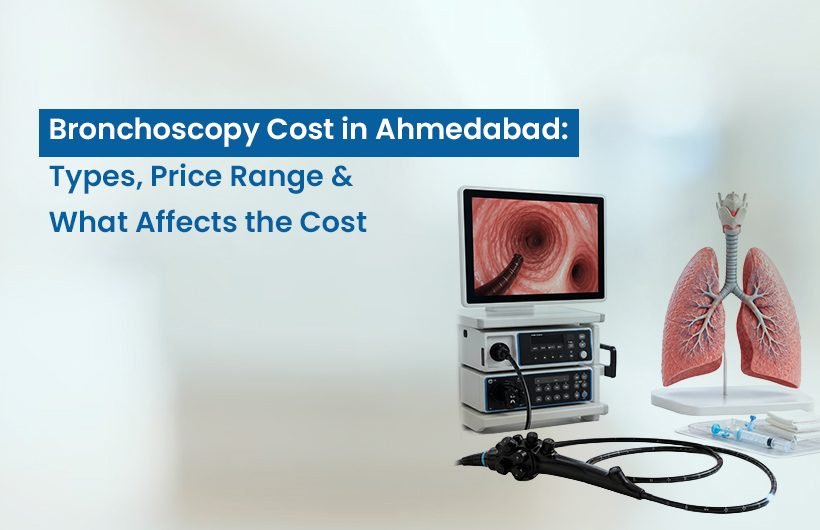
Bronchoscopy is a procedure that lets a pulmonologist look directly inside your airways the trachea and bronchi using a thin, lighted instrument called a bronchoscope. It’s one of the most reliable ways to investigate a persistent cough, unexplained breathlessness, an abnormal chest X-ray or CT scan, or suspected infections, tumors, or blockages in the airway.
The procedure can be purely diagnostic or therapeutic. Most patients tolerate it well because it’s done under sedation or local anesthesia, and it typically takes 20 to 40 Because the procedure requires precision and experience with the airway, it’s best performed by a qualified bronchoscopy specialist in Ahmedabad who can tailor the approach flexible or rigid to your specific condition. minutes.
Types of Bronchoscopy
Flexible Bronchoscopy
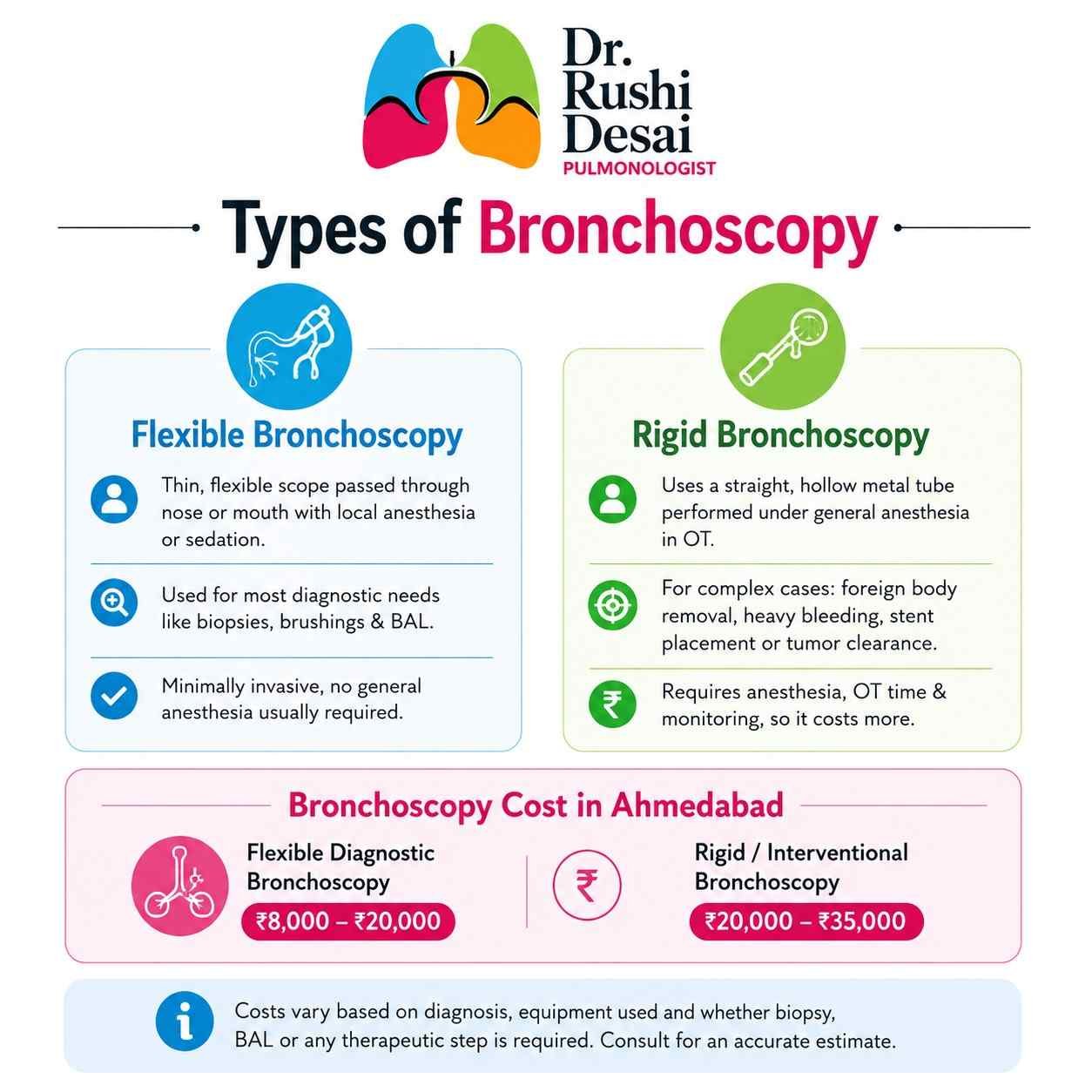
This is the standard, most widely used technique. A thin, flexible bronchoscope is passed through the nose or mouth, down the throat, and into the airways while the patient is under conscious sedation or local anesthesia. It’s minimally invasive, doesn’t usually require general anesthesia, and is suitable for most diagnostic needs including biopsies, brushings, and bronchoalveolar lavage (BAL), where fluid is used to sample the airway lining.
Rigid Bronchoscopy
Rigid bronchoscopy uses a straight, hollow metal tube and is performed under general anesthesia in an operation theatre setting. It’s reserved for more complex situations removing a foreign body, managing significant airway bleeding, placing airway stents, or clearing tumors that are blocking the airway. Because it requires anesthesia support, OT time, and closer monitoring, it costs more than flexible bronchoscopy.
Bronchoscopy Cost in Ahmedabad
Bronchoscopy cost in Ahmedabad generally falls between ₹8,000 and ₹35,000, with flexible diagnostic bronchoscopy at the lower end and rigid or interventional bronchoscopy where a biopsy, stent, or foreign body removal is involved at the higher end. Basic diagnostic flexible bronchoscopy without additional intervention often starts closer to ₹8,000–₹10,000 at many centers, while procedures that include biopsy, BAL, or a short hospital stay can push the total toward ₹20,000–₹35,000.
These are indicative ranges. The only way to get an accurate figure for your situation is a direct consultation, since your final cost depends on your diagnosis, the equipment used, and whether any tissue sampling or therapeutic step is added during the procedure.
Average Cost Breakdown by Type
Factors Affecting Bronchoscopy Cost in Ahmedabad
Several variables influence the final bill, and understanding them helps you ask the right questions before the procedure:
- Type of bronchoscopy: Flexible procedures cost less than rigid or interventional ones, which need general anesthesia and OT time.
- Add-on procedures: A biopsy, brushing, bronchoalveolar lavage, or stent placement each adds to the base cost.
- Anesthesia type: Conscious sedation is less expensive than general anesthesia with an anesthesiologist present.
- Hospital category: Costs differ between a standalone clinic setup, a mid-sized hospital, and a large multi-specialty or super-specialty hospital.
- Admission requirement: A purely outpatient bronchoscopy costs less than one requiring even a short overnight stay for observation.
- Pre-procedure diagnostics: Blood work, ECG, or imaging done before the procedure are usually billed separately.
- Pathology/lab charges: If tissue or fluid samples are collected, histopathology or culture testing adds to the total.
- Doctor’s experience and hospital infrastructure: Centers with advanced endoscopy suites and experienced interventional pulmonologists may price procedures differently based on equipment and expertise.
Risks and Complications
Bronchoscopy is considered a safe, well-established procedure, and serious complications are uncommon. Still, as with any procedure involving the airway, some risks exist:
- Mild throat irritation, hoarseness, or a sore throat for a day or two
- Minor bleeding, particularly if a biopsy is taken
- Temporary drop in oxygen levels during the procedure, which is closely monitored
- Fever, usually low-grade, in the hours following the procedure
- Rarely, pneumothorax (a small air leak around the lung) if a lung biopsy is performed
- Reactions related to sedation or anesthesia, which your care team screens for beforehand
Your pulmonologist will review your medical history, current medications, and any bleeding risk before the procedure specifically to minimize these risks.
Recovery Process After Bronchoscopy
Recovery from bronchoscopy is usually fast and straightforward:
- Immediately after: You’ll be monitored in a recovery area for 1–2 hours while the sedative or local anesthetic wears off.
- Throat numbness: Your throat will remain numb for a few hours avoid eating or drinking until sensation fully returns, to prevent choking.
- Same-day discharge: Most patients go home the same day. If general anesthesia or a therapeutic procedure was involved, an overnight stay may be advised.
- Mild symptoms: A scratchy throat, mild cough, or slight hoarseness for 24–48 hours is normal.
- Resuming activity: Most people return to normal daily activities within a day; if sedation was used, avoid driving or operating machinery for 24 hours.
- Follow-up: Biopsy or lab results are typically reviewed at a follow-up visit within a few days to a week.
Benefits of Early Diagnosis
Catching a lung condition early, whether it’s an infection, inflammatory disease, or an early-stage tumor changes the treatment path significantly. Early diagnosis through bronchoscopy can mean:
- Starting targeted treatment before a condition progresses
- Avoiding more invasive surgical procedures down the line
- Better long-term outcomes for conditions like lung cancer, where stage at diagnosis strongly affects prognosis
- Faster resolution of infections that might otherwise be misdiagnosed or undertreated
- More treatment options being available, since early-stage disease generally responds to a wider range of therapies
When Should You Consult a Pulmonologist?
You should book a consultation with a pulmonologist if you experience:
- A cough lasting more than three weeks
- Coughing up blood, even a small amount
- Unexplained breathlessness, especially if it’s worsening
- An abnormal finding on a chest X-ray or CT scan
- Recurrent chest infections
- Unexplained weight loss along with respiratory symptoms
- Wheezing or chest tightness that isn’t improving with standard treatment
Dr Rushi Desai, a pulmonologist and bronchoscopy specialist in Ahmedabad, evaluates these symptoms and, when needed, uses bronchoscopy to reach an accurate diagnosis quickly, helping you avoid the anxiety of uncertainty and start the right treatment sooner.
Conclusion
Bronchoscopy cost in Ahmedabad typically ranges from ₹8,000 to ₹35,000, shaped mainly by the type of procedure, whether a biopsy or therapeutic step is involved, and the hospital setting you choose. More important than the number on the bill is getting an accurate diagnosis from an experienced pulmonologist because the right diagnosis is what actually determines your treatment path and recovery.
Expert Bronchoscopy Care in Ahmedabad
If you’ve been advised to undergo bronchoscopy, or you’re dealing with a persistent cough, breathlessness, or an abnormal scan result, consult Dr. Rushi Desai, Pulmonologist and Bronchoscopy Specialist in Ahmedabad, for a personalized evaluation and a clear, transparent cost estimate based on your specific case.
Frequently Asked Questions
Is bronchoscopy high risk?
No, bronchoscopy is generally considered a low-risk, routine diagnostic procedure. Serious complications are rare, and most patients experience only mild, temporary side effects like throat irritation. Your pulmonologist will assess your individual risk factors beforehand and take precautions accordingly.
Is bronchoscopy very painful?
Most patients don’t describe it as painful. The throat is numbed with local anesthetic, and sedation is used to keep you relaxed and comfortable throughout. You may feel some pressure or an urge to cough, but significant pain is uncommon.
What is another name for bronchoscopy?
Bronchoscopy is sometimes referred to as an airway endoscopy or bronchial endoscopy. When it involves fluid sampling specifically, that part of the procedure is called bronchoalveolar lavage (BAL).
What is the success rate of bronchoscopy?
Bronchoscopy has a high diagnostic success rate, generally cited in the low-to-mid 90% range across studies, meaning it successfully identifies the underlying issue in the vast majority of cases where it’s clinically indicated. Success can depend on the specific condition being investigated and the technique used.
What should you eat after bronchoscopy?
Wait until your throat’s numbness fully wears off usually 1 to 2 hours before eating or drinking anything, to avoid choking. Start with cool or room-temperature liquids, then move to soft, easy-to-swallow foods like soup, yogurt, or mashed foods for the rest of the day. Avoid hot beverages, spicy food, and alcohol until your throat feels completely normal.