
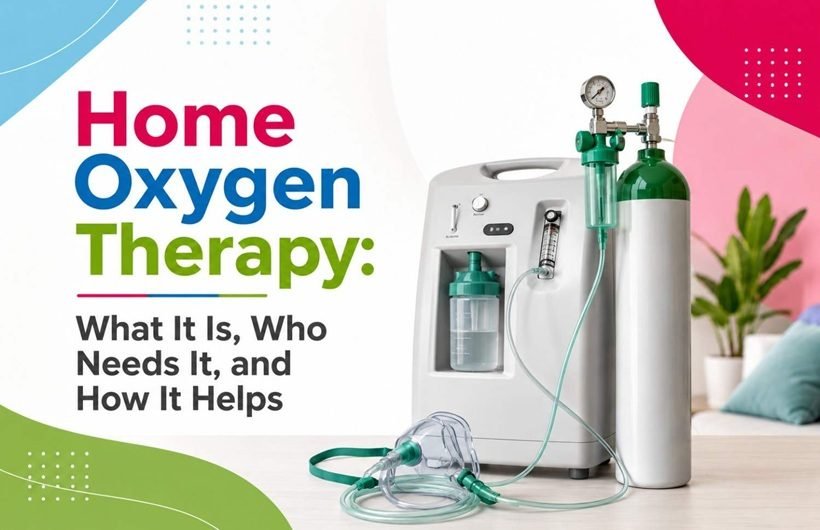
If breathlessness has started interfering with your daily life, whether it’s climbing stairs, walking to the kitchen, or even talking, your doctor may have mentioned home oxygen therapy as part of your treatment plan. For many patients with chronic lungs or heart conditions, this single word can feel overwhelming at first.
The good news is that home oxygen therapy is one of the most well-established and effective treatments in respiratory medicine. When used correctly, it can ease breathlessness, protect your organs, and help you get back to the activities you enjoy.
What Is Oxygen Therapy?
Oxygen therapy is a treatment that delivers extra oxygen to your lungs when your body isn’t getting enough on its own. Normally, when you breathe in, oxygen passes from your lungs into your bloodstream, which then carries it to your organs and tissues to keep them functioning. When a lung or heart condition disrupts this process, your blood oxygen levels can drop, a condition called hypoxemia. Left untreated, chronically low oxygen can damage vital organs over time.
Home oxygen therapy simply brings this same medical-grade treatment into your house. Oxygen is delivered through a nasal cannula (thin tubing that sits under your nose) or a face mask, connected to an oxygen tank or a machine that concentrates oxygen from the air around you.
It’s important to remember that oxygen is a prescription medical treatment, not something to self-administer. A pulmonologist typically confirms the need for oxygen therapy through a blood test or a pulse oximetry reading before prescribing it and decides the exact flow rate and duration you need.
Who Needs Oxygen Therapy?
Not everyone who feels breathless needs supplemental oxygen; the decision is based on measured blood oxygen levels, not symptoms alone. Your doctor may recommend home oxygen therapy if you have:
- COPD (Chronic Obstructive Pulmonary Disease), one of the most common reasons for long-term home oxygen use
- Interstitial lung disease (ILD), including pulmonary fibrosis
- Pulmonary hypertension
- Heart failure
- Severe, long-standing asthma
- Cystic fibrosis
- Respiratory infections such as pneumonia or COVID-19, where oxygen levels drop temporarily
- Patients recovering after lung transplantation or major thoracic surgery
If you’ve been diagnosed with a chronic lung condition and have started noticing breathlessness on exertion, disturbed sleep, or a bluish tint to your lips or fingertips, it’s worth getting your oxygen levels checked by a pulmonologist rather than waiting for symptoms to worsen. Dr. Rushi Desai Pulmonologist in Ahmedabad, evaluates patients with chronic respiratory conditions and determines whether home oxygen therapy is appropriate as part of a broader treatment plan.
Types of Oxygen Therapy Systems
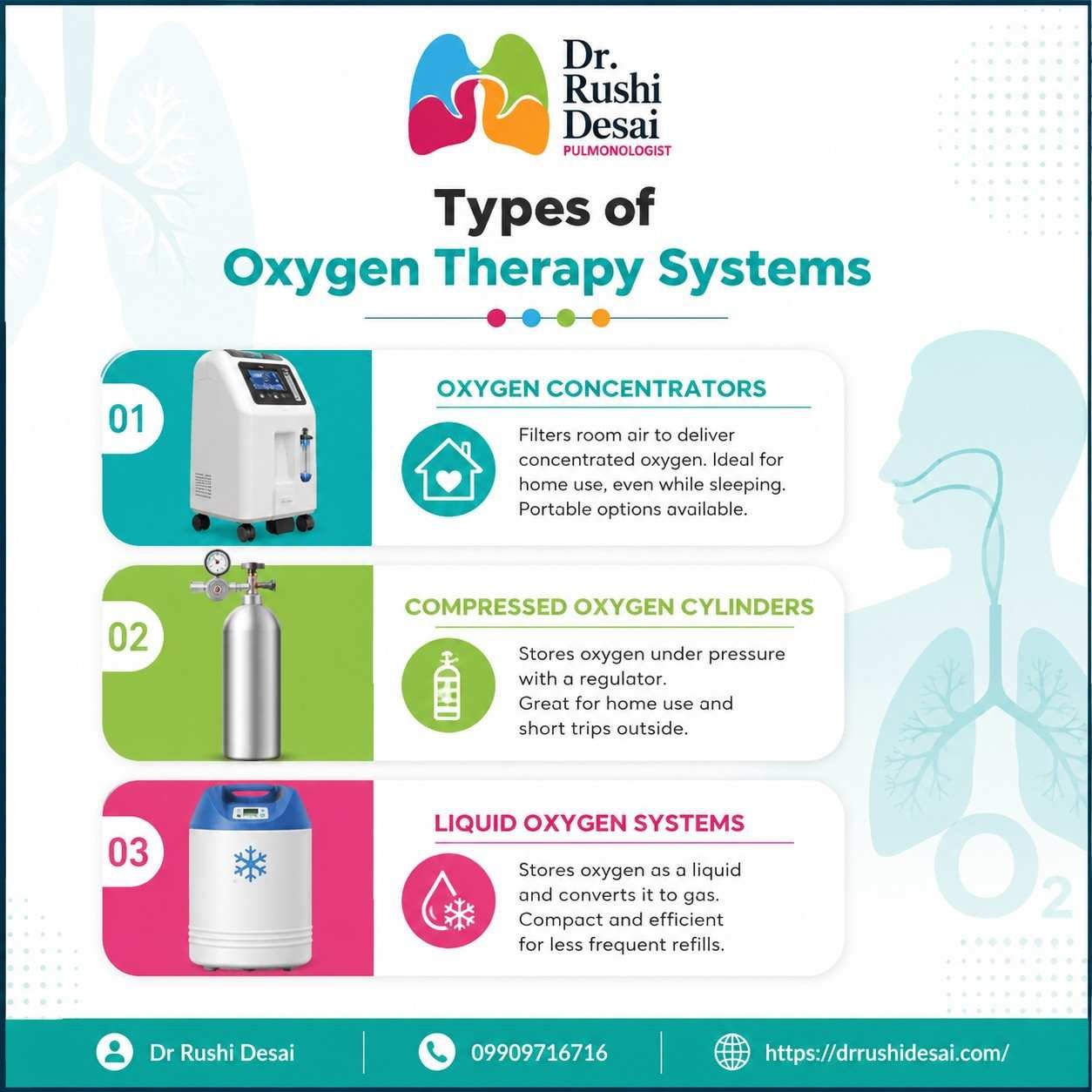
Once your doctor prescribes oxygen therapy, a respiratory equipment provider will help set you up with a delivery system suited to your daily routine. The three main types are:
1. Oxygen Concentrators
These are electrical machines about the size of a small suitcase that pull in room air, filter out nitrogen, and deliver concentrated oxygen. Since they draw oxygen from the air rather than a stored supply, they never run out, making them ideal for patients who need oxygen for most of the day, including while sleeping. Portable, battery-operated concentrators are also available for patients who need to travel or stay active outside the home.
2. Compressed Oxygen Cylinders
These metal cylinders store 100% oxygen under pressure and are fitted with a regulator to control flow. Larger cylinders are often kept at home for continuous use, while smaller portable cylinders can be carried outside for short trips. A built-in gauge tells you when a refill is needed.
3. Liquid Oxygen Systems
Liquid oxygen is stored in an insulated container as a very cold liquid and converted into breathable gas as needed. These systems are more compact than compressed gas cylinders for the same amount of oxygen, though they are less commonly prescribed today compared to concentrators.
Your pulmonologist and equipment provider will recommend the system that best matches your prescribed flow rate, mobility needs, and lifestyle, whether that’s continuous, night-time-only, or activity-based oxygen use.
Side Effects of Home Oxygen Therapy
Home oxygen therapy is generally safe when used exactly as prescribed, but it isn’t entirely risk-free. Common and important side effects to be aware of include:
- Dryness and nosebleeds from the nasal cannula, especially with higher flow rates
- Skin irritation around the ears, nose, or cheeks where tubing rests
- Oxygen toxicity, a rare but serious risk of taking in more oxygen than your body needs. Warning signs include chest pain, breathing difficulty, dizziness, headaches, fatigue, muscle spasms, nausea, or vision changes; this requires immediate medical attention.
- Fire risk, since oxygen supports combustion. Oxygen equipment should always be kept well away from open flames, gas stoves, heaters, and cigarettes.
If you or a caregiver ever notices symptoms of oxygen poisoning or worsening breathlessness despite using your oxygen device correctly, seek emergency care right away and inform your treating pulmonologist as soon as possible.
Benefits of Home Oxygen Therapy
When used as prescribed, home oxygen therapy can meaningfully improve day-to-day life for patients with chronic respiratory conditions. Key benefits include:
- Reduced breathlessness during daily activities like walking, bathing, or climbing stairs
- Better sleep quality, since oxygen levels often dip during sleep in patients with lung disease
- More energy and stamina for physical activity
- Protection for vital organs, including the heart and brain, from the long-term effects of low blood oxygen
- Improved overall quality of life, allowing many patients to continue working, socializing, and staying independent at home
- Fewer hospitalizations in patients with conditions like COPD, when oxygen therapy is used consistently as prescribed
For patients managing complex conditions such as pulmonary hypertension, interstitial lung disease, or those recovering after a lung transplant, oxygen therapy is often one part of a larger, personalized treatment strategy.
When to See a Pulmonologist
If you or a loved one is experiencing persistent breathlessness, fatigue, or has been diagnosed with a chronic lung condition, timely evaluation by a specialist can make a significant difference in managing symptoms before they progress. Dr. Rushi Desai is an experienced pulmonologist in Ahmedabad, offering comprehensive evaluation and treatment for conditions such as COPD, interstitial lung disease, and pulmonary hypertension, including guidance on whether home oxygen therapy is right for you.
For patients with advanced or end-stage lung disease who may need more specialized care, Dr. Desai also serves as a lung transplant specialist in Ahmedabad, helping patients navigate the full spectrum of respiratory care, from early diagnosis to advanced interventions.
pulmonologist in Ahmedabad
Have questions about home oxygen therapy or your breathing symptoms? Book a consultation with Dr. Rushi Desai’s clinic in Ahmedabad today.
Frequently Asked Questions
Can oxygen therapy be given at home?
Yes. Home oxygen therapy is a standard part of managing many chronic lung and heart conditions. Once your pulmonologist prescribes it based on your blood oxygen levels, equipment such as a concentrator or oxygen cylinder is set up in your home, along with guidance on how and when to use it.
What oxygen level is needed for home oxygen?
Doctors typically consider home oxygen therapy when blood oxygen saturation consistently falls below the normal range, usually measured through a pulse oximeter or an arterial blood gas test. The exact threshold and prescribed flow rate depend on your specific condition, so this should always be determined by your pulmonologist rather than a general guideline.
How to manage oxygen therapy at home?
Follow your prescribed flow rate and usage schedule exactly, keep your equipment clean and well-maintained, position your device in a well-ventilated area, and check oxygen levels or cylinder gauges regularly. Keep the device away from open flames and heat sources and schedule regular follow-ups with your pulmonologist to reassess your oxygen needs over time.
What is the biggest mistake when using oxygen?
One of the most common and dangerous mistakes is adjusting the oxygen flow rate on your own, either increasing it because you feel more breathless or reducing it without medical advice. Oxygen levels should only be changed by your doctor, since incorrect flow rates can lead to complications, including oxygen toxicity.
What are the side effects of oxygen therapy at home?
The most common side effects are nasal dryness, nosebleeds, and skin irritation from the tubing. Less common but more serious risks include oxygen toxicity and fire hazards, both of which are preventable by following your prescribed flow rate and standard safety precautions.
How long should a patient be on oxygen therapy?
This varies widely by condition. Some patients need oxygen therapy for life to manage a chronic disease like COPD or pulmonary fibrosis, while others need it only temporarily during recovery from an infection or a flare-up. Your pulmonologist will reassess your oxygen levels periodically to determine whether therapy needs to continue, change, or can be stopped.
This article is intended for general educational purposes and is not a substitute for professional medical advice. Always consult your pulmonologist before starting, stopping, or adjusting oxygen therapy.