
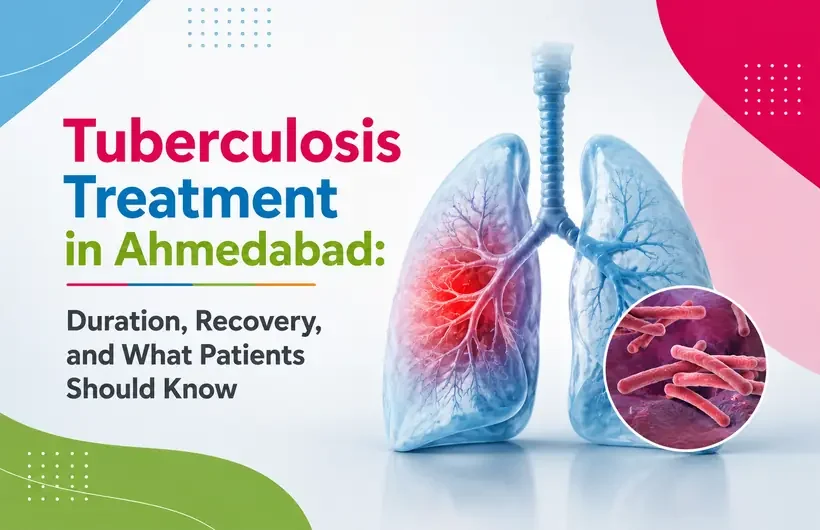
A TB diagnosis raises one question before any other: how long is this going to take? For most patients, standard tuberculosis treatment in Ahmedabad runs about six months, though the exact course depends on which type of TB you have and how your body responds to it.
Getting the full picture, from diagnosis to the last dose, matters more than most patients realize. It’s one of the main reasons people search for the best pulmonologist in Ahmedabad after a TB diagnosis, rather than trying to piece the timeline together on their own.
What Is Tuberculosis, and How Serious Is It?
Tuberculosis is a bacterial infection caused by Mycobacterium tuberculosis, and it most commonly affects the lungs, though it can spread to other parts of the body. It travels through the air when someone with active TB coughs, sneezes, or talks, and a person nearby can inhale the bacteria and become infected.
TB is one of the more stubborn infectious diseases India deals with, but here’s the part that gets lost in the anxiety of a diagnosis: it’s both preventable and curable. The outcome depends heavily on catching it early and sticking with treatment through to the end. If you’ve had a cough lasting more than two to three weeks, unexplained weight loss, night sweats, or blood in your sputum, it’s worth knowing when to see a pulmonologist rather than waiting it out.
What Causes Tuberculosis, and Who’s at Higher Risk?
TB spreads through prolonged close contact with someone who has active, untreated disease, not through a single passing interaction. Inhaling even a small number of the bacteria can be enough to cause infection, though not everyone infected develops active disease; many people carry a latent, non-contagious form for years.
Certain groups face a higher risk of progressing from infection to active TB, including people with diabetes, malnutrition, weakened immunity (including HIV), smokers, and those living in crowded or poorly ventilated conditions. Smoking in particular doesn’t just raise your risk of contracting TB; it also increases the risk of the infection returning after treatment.
How Is Tuberculosis Diagnosed and Treated?
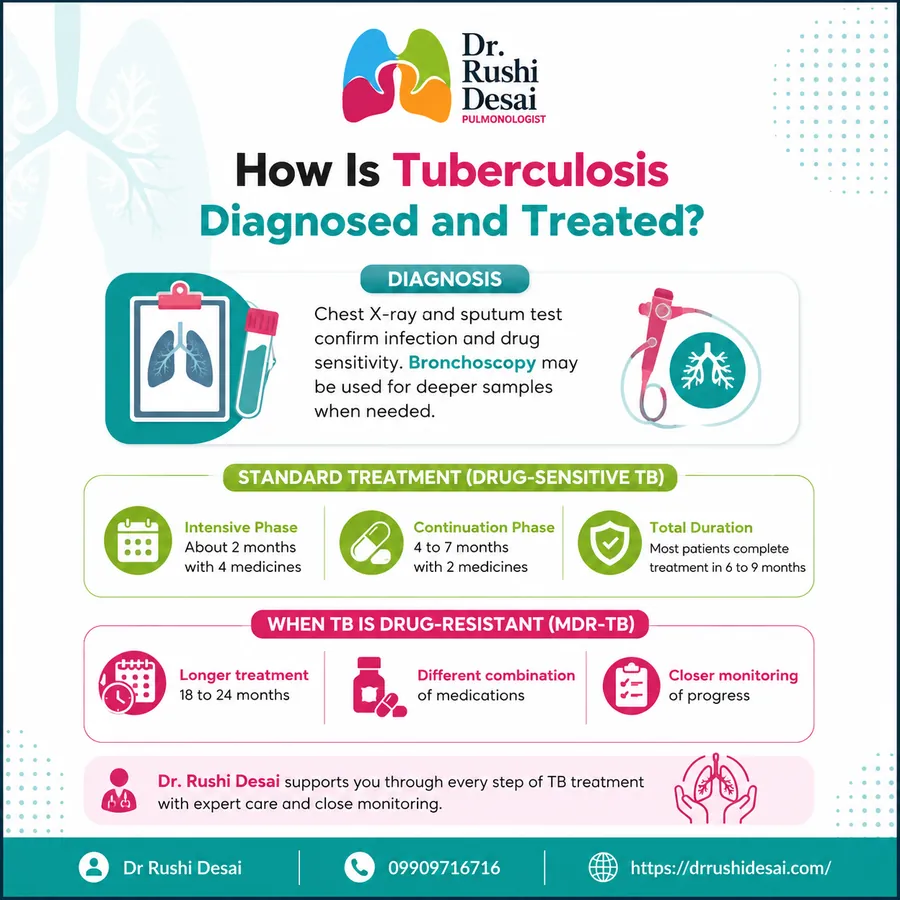
Diagnosis usually starts with a chest X-ray and a sputum test to confirm active infection and identify which drugs the bacteria will respond to. In cases where sputum samples are inconclusive or the disease pattern is unusual, a bronchoscopy may be used to collect a more direct sample from deeper in the lungs.
Standard treatment for drug-sensitive TB:–
- Intensive phase: About two months on four medications
- Continuation phase: Four to seven months on two medications
- Total duration: Most patients complete treatment within six to nine months
When TB doesn’t follow the standard path (MDR-TB):–
Multi-drug-resistant TB (MDR-TB) occurs when the bacteria no longer respond to the two most effective first-line drugs. It requires:
- A longer, more closely monitored course, often 18 to 24 months
- A different combination of medications
- Closer tracking of how the disease is responding
This is where having a pulmonologist track your progress closely matters most. Dr. Rushi Desai works with patients through every phase of treatment, adjusting the plan as needed and keeping a close eye on how the disease is responding.
What to Expect During Recovery
Most patients on standard treatment stop being contagious within two to three weeks of starting medication, which is reassuring news for families living in the same household. But contagiousness fading isn’t the same as being cured; the bacteria are still present and need the full course of treatment to be cleared completely.
Key things to keep in mind during recovery:–
Focus on nutrition. Good nutrition plays a real role in recovery, since TB and malnutrition tend to feed into each other.
Don’t stop early. Symptoms often improve well before the treatment course ends, but stopping medication once you feel better is one of the most common causes of treatment failure and drug resistance.
Complete the full course exactly as prescribed. It’s the difference between a full cure and a much harder second round of treatment.
Expect periodic follow-ups. Repeat sputum tests confirm the bacteria are clearing on schedule.
Watch for side effects. Mild issues like nausea or loss of appetite are common early on; more serious reactions are rare but should be reported right away, not managed by skipping doses.
Conclusion
A TB diagnosis can feel overwhelming, but the path forward is well-defined: an accurate diagnosis, the right drug regimen, and seeing the full course through to completion. Most patients who follow through on tuberculosis treatment go on to make a complete recovery.
Tuberculosis (TB) Specialist in Ahmedabad
If you or a family member has a persistent cough, unexplained weight loss, or has recently been told you may have TB, contact us today to book a consultation with Dr. Rushi Desai, or chat with us on WhatsApp for quicker questions before your visit.
Frequently Asked Questions
Q: How long does TB treatment usually take?
Standard drug-sensitive TB typically takes six to nine months: two months of intensive treatment followed by four to seven months of continuation therapy. MDR-TB takes considerably longer.
Q: Is tuberculosis curable?
Yes. With an accurate diagnosis and a completed course of treatment, TB is curable in the large majority of cases.
Can I stop treatment once I start feeling better?
No. Feeling better is not the same as being cured. Stopping early is the leading cause of treatment failure and drug-resistant TB.
Is TB contagious throughout the entire treatment period?
No. Most patients on effective treatment become non-contagious within two to three weeks, though the full course still needs to be completed.
Q: What is MDR-TB?
Multi-drug-resistant TB is a form of the disease that doesn’t respond to the two most important first-line drugs. It requires a longer treatment course with a different combination of medications and closer monitoring.
Q: Does smoking affect TB treatment or recovery?
Yes. Smoking increases both the risk of developing active TB and the risk of it recurring after treatment, so quitting is strongly recommended alongside medical treatment.