
A lung cancer diagnosis changes more than your physical health. It can bring fear, anxiety, uncertainty, and emotional exhaustion that affect your daily life, your relationships, and even how well you cope with treatment. If you are wondering whether stress during lung cancer treatment is normal, the answer is yes, and learning how to manage it is an important part of your recovery.
Research shows that ongoing stress can affect sleep, appetite, energy levels, treatment adherence, and overall quality of life. While stress does not directly cause lung cancer to worsen, managing emotional well-being can help patients stay physically and mentally stronger throughout treatment.
In this guide, you’ll learn how stress affects people living with lung cancer, the warning signs that should not be ignored, and practical, evidence-based strategies to reduce anxiety and improve emotional well-being during every stage of treatment. If you are looking for expert support from a Pulmonologist in Ahmedabad, understanding the connection between emotional health and lung cancer care is an important first step toward better recovery.
Understanding Stress in Lung Cancer Patients
Stress, in this context, is not just feeling worried. It is a full-body physiological and psychological response triggered by the perceived threat of a life-changing illness.
When you are diagnosed with lung cancer, your brain activates the stress response, the same survival mechanism that would fire if you faced a physical danger. Your body releases cortisol and adrenaline, your heart rate increases, your muscles tense, and your mind races.
For most people, this response should ease once the threat passes. But for a lung cancer patient, the threat does not go away. It continues through every chemotherapy session, every scan result, every moment of waiting. The body stays in a prolonged state of stress, and over time, this takes a significant toll.
Common sources of stress in lung cancer patients include:
- Shock and disbelief immediately after diagnosis
- Fear of death or disease progression
- Side effects of treatment such as fatigue, nausea, and hair loss
- Financial strain from medical expenses and lost income
- Worry about family members, especially dependents
- Feelings of isolation, guilt, or loss of identity
- Uncertainty about the future
How Can Stress Affect Lung Cancer?
This is one of the most important questions patients ask, and the answer matters more than most people realize.
Chronic stress does not just affect how you feel emotionally. It creates measurable changes in the body that can directly interfere with your lung cancer treatment and recovery.
1. Stress Weakens the Immune System
Your immune system plays a vital role in recognizing and fighting abnormal cancer cells. Cortisol, the primary stress hormone, suppresses immune function when it stays elevated for prolonged periods. This means a highly stressed body may be less equipped to support the immune responses that are critical during lung cancer treatment.
2. Stress Can Interfere with Treatment Effectiveness
Research suggests that chronic psychological stress may affect how the body responds to cancer treatments like chemotherapy and immunotherapy. Stress hormones can trigger inflammatory pathways in the body, which may create an environment where cancer cells are more likely to survive and spread.
3. Stress Affects Sleep, and Sleep Affects Everything
Most lung cancer patients experience significant sleep disturbances due to anxiety, pain, or medication side effects. Poor sleep impairs cellular repair, reduces treatment tolerance, and worsens emotional resilience. The cycle is self-reinforcing: stress disrupts sleep, and poor sleep amplifies stress.
4. Stress Reduces Treatment Adherence
Patients dealing with high levels of psychological distress are statistically more likely to delay or abandon treatment. Fear, hopelessness, and overwhelm can make it harder to keep appointments, follow medication schedules, or communicate openly with your medical team.
5. Stress Worsens Physical Side Effects
Nausea, pain, and fatigue, already common side effects of lung cancer treatment, are made significantly worse by unmanaged stress. The body-mind connection is well documented: when the mind is under constant strain, physical symptoms feel more intense and harder to bear.
Signs and Symptoms of Stress in Lung Cancer Patients
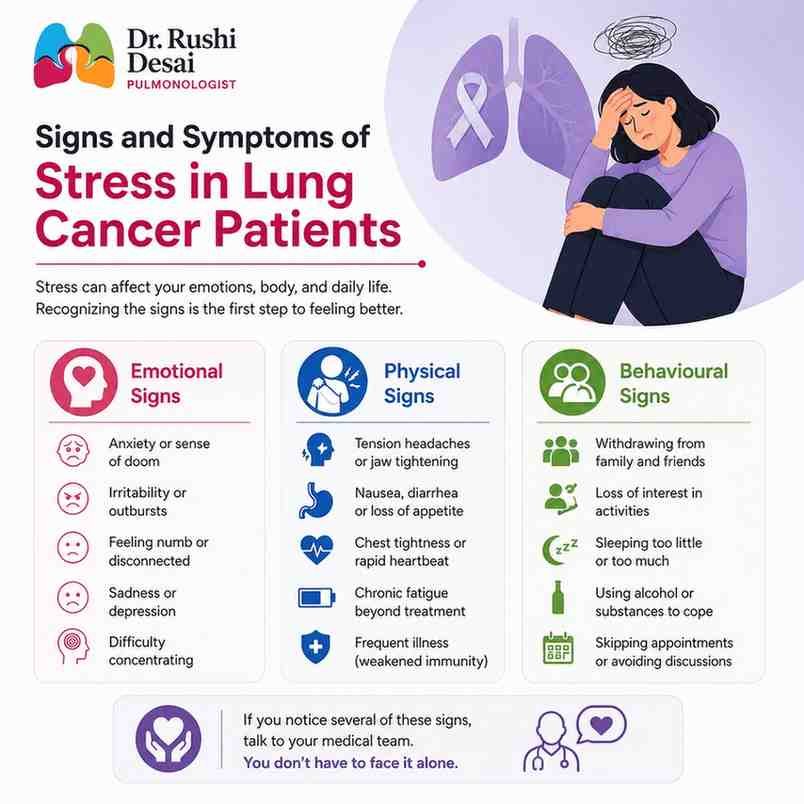
Stress does not always look the way people expect. It is not always visible as tears or panic. In cancer patients, stress often presents in subtle, layered ways that can be mistaken for treatment side effects or general fatigue.
Emotional signs of stress:
- Persistent anxiety or a sense of impending doom
- Irritability, anger, or emotional outbursts
- Feeling emotionally numb or disconnected
- Sadness, hopelessness, or depression
- Difficulty concentrating or making decisions
Physical signs of stress:
- Tension headaches or jaw tightening
- Digestive issues such as nausea, diarrhea, or loss of appetite
- Chest tightness or rapid heartbeat
- Chronic fatigue that is not explained by treatment alone
- Frequent illness due to reduced immune function
Behavioural signs of stress:
- Withdrawing from family and friends
- Loss of interest in activities once enjoyed
- Difficulty sleeping or sleeping too much
- Increased use of alcohol or other substances as coping mechanisms
- Skipping medical appointments or avoiding treatment conversations
If you or a family member recognises several of these signs, it is important to bring them to the attention of your medical team. Stress is a clinical concern, not something to push through alone simply.
How Does Stress Contribute to Treatment Challenges?
Stress does not just exist alongside lung cancer it actively creates obstacles within the treatment process itself. Understanding exactly how stress contributes to treatment challenges helps patients and caregivers take a more proactive approach.
Stress and nutrition:
Anxiety reduces appetite and affects digestion, which leads to nutritional deficits. Proper nutrition is essential for maintaining strength during chemotherapy or radiation. A malnourished body tolerates treatment poorly, recovers more slowly, and experiences more complications.
Stress and inflammation:
Emotional stress triggers the release of pro-inflammatory cytokines in the body. Chronic low-grade inflammation has been linked to cancer progression and poorer treatment outcomes. Managing stress is therefore one way to help reduce this inflammatory burden.
Stress and communication:
Patients who are overwhelmed by stress often struggle to communicate effectively with their doctors. They may forget to report symptoms, avoid asking important questions, or feel too emotionally drained to participate actively in their care decisions. This communication gap can affect the quality of their treatment.
This is why managing stress during Lung Cancer Treatment is considered an essential component of clinical care not a soft, optional add-on.
Effective Stress Management Strategies for Lung Cancer Patients
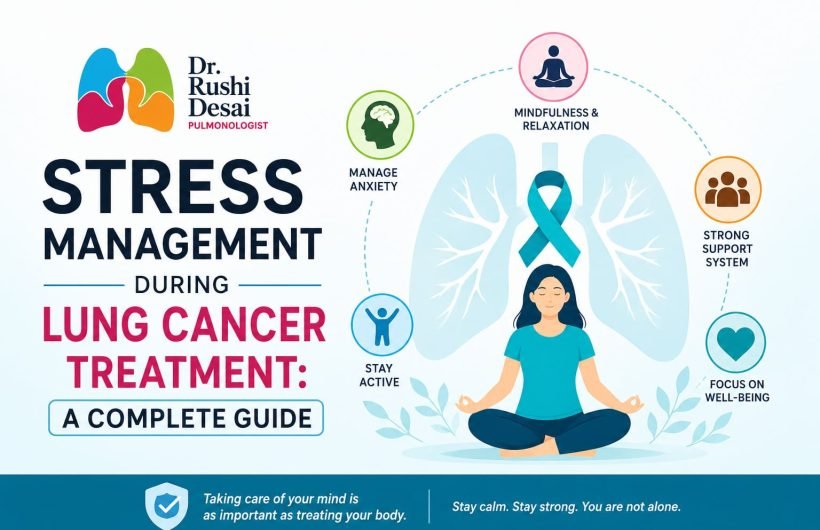
Managing stress during lung cancer treatment works best when combining simple daily habits that support both mental and physical health.
1. Mindfulness & Meditation
Practising mindfulness or simple breathing exercises can help reduce anxiety, improve sleep, and bring emotional balance during treatment.
2. Light Physical Activity
Walking, yoga, or gentle stretching may lower stress, improve energy, and support better overall wellbeing. Always consult your doctor before starting exercise.
3. Professional Mental Health Support
Therapies like CBT can help patients manage anxiety, depression, and emotional challenges that come with a cancer diagnosis.
4. Support Groups
Talking with others going through similar experiences can reduce feelings of isolation and provide emotional support.
5. Better Sleep Habits
Maintaining a regular sleep routine and reducing screen time before bed can improve rest and support recovery.
6. Healthy Nutrition & Hydration
A balanced diet and proper hydration can improve treatment tolerance and help support emotional wellbeing.
7. Journaling & Creative Activities
Writing thoughts or engaging in creative activities like music or art can help reduce emotional stress.
8. Honest Communication With Doctors
Sharing emotional struggles with your medical team helps them provide better overall care and support throughout treatment.
The Importance of Complete Lung Cancer Care
Dr Rushi Desai, a trusted pulmonologist based in Ahmedabad, believes that effective lung cancer care must address both the body and the mind. In his clinical experience, patients who actively engage with stress management strategies tend to report better treatment tolerance, greater emotional resilience, and a stronger ability to maintain hope through the most difficult stages of their journey.
His approach integrates evidence-based medical treatment with patient-centred support, ensuring that every patient who walks through the door is treated as a whole human being, not just a diagnosis.
Conclusion
Living with lung cancer can be emotionally challenging, but proper medical care, mental health support, and healthy coping strategies can make the journey more manageable. Managing stress is just as important as treating the disease itself.
Expert Support for Better Lung Cancer Management
Lung cancer treatment goes beyond medications and procedures. With proper medical guidance and emotional support, patients can manage treatment more effectively and improve overall quality of life with expert care from Dr Rushi Desai.
✔ Early Diagnosis | ✔ Personalized Treatment
Frequently Asked Questions
What are the early warning signs of lung cancer?
Common early signs include persistent cough, coughing blood, shortness of breath, chest infections, fatigue, and unexplained weight loss. Symptoms lasting more than a few weeks should be checked by a pulmonologist.
How is lung cancer confirmed?
Doctors usually confirm lung cancer through chest X-rays, CT scans, and a biopsy. Additional tests like bronchoscopy or PET scans may also be needed.
Where is pain felt in lung cancer?
Pain is commonly felt in the chest and may spread to the back, shoulder, or arm. In advanced stages, bone pain may also occur.
What age group is most affected by lung cancer?
Lung cancer is most common in people above 55, but younger adults can also develop it, especially due to genetic factors or lifestyle risks.
Is lung cancer always life-threatening?
The outcome depends on the cancer type and stage. With early diagnosis and advanced treatment options, many patients can manage the disease and maintain quality of life.