
If your doctor has just told you that you need a chest procedure, the names alone can be confusing. Bronchoscopy and thoracoscopy sound similar, but they look inside your body in completely different ways and are used for different problems. Getting a clear bronchoscopy explanation before your appointment can make the whole process feel far less intimidating, whether you’re being evaluated by the best pulmonologist in Ahmedabad or preparing for a scheduled procedure elsewhere. This guide walks through what each test involves, why one might be recommended over the other, and what your recovery will look like either way.
What Is Bronchoscopy?
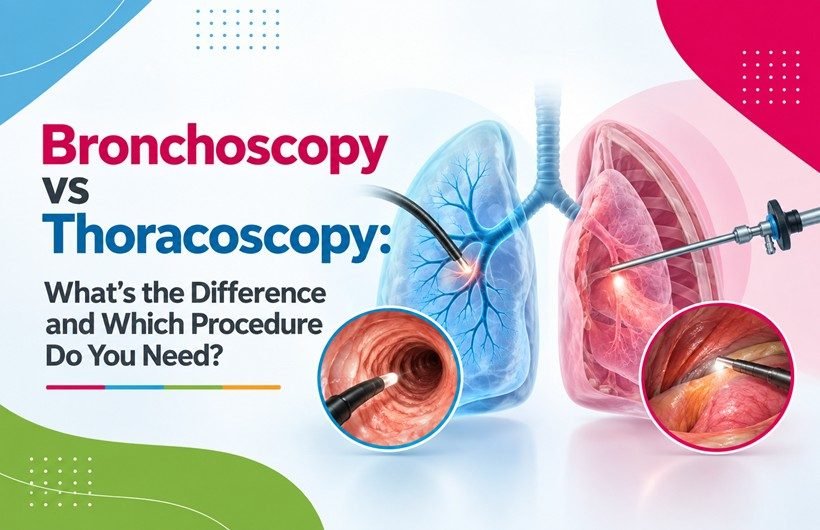
Bronchoscopy is a procedure where a thin, flexible tube with a camera on the end (a bronchoscope) is passed through your nose or mouth, down your windpipe, and into your airways. It lets your pulmonologist see directly inside your bronchial tubes.
It’s typically done under light sedation, takes about 20 to 40 minutes, and most patients go home the same day. During the procedure, your doctor can take small tissue or fluid samples, remove mucus plugs, or investigate the cause of a persistent cough, unexplained lung shadow, or recurring infection. It’s one of the most common diagnostic tools in pulmonology because it reaches deep into the airways without requiring any incision.
What Is Thoracoscopy?
Thoracoscopy is a different kind of procedure altogether. Instead of going through your airway, a small camera is inserted through a tiny incision in your chest wall to look at the outside of your lungs and the pleural space, the thin layer surrounding your lungs.
This approach is used when the problem isn’t inside the airway itself but in the pleura or the lung surface. For example, unexplained fluid buildup around the lung, a suspicious spot on the outer lung tissue, or a case of pleural disease that a bronchoscopy simply can’t reach. It usually requires sedation or light anesthesia, and depending on what’s found, your doctor may take a biopsy or drain fluid during the same visit.
Bronchoscopy vs Thoracoscopy: Key Differences
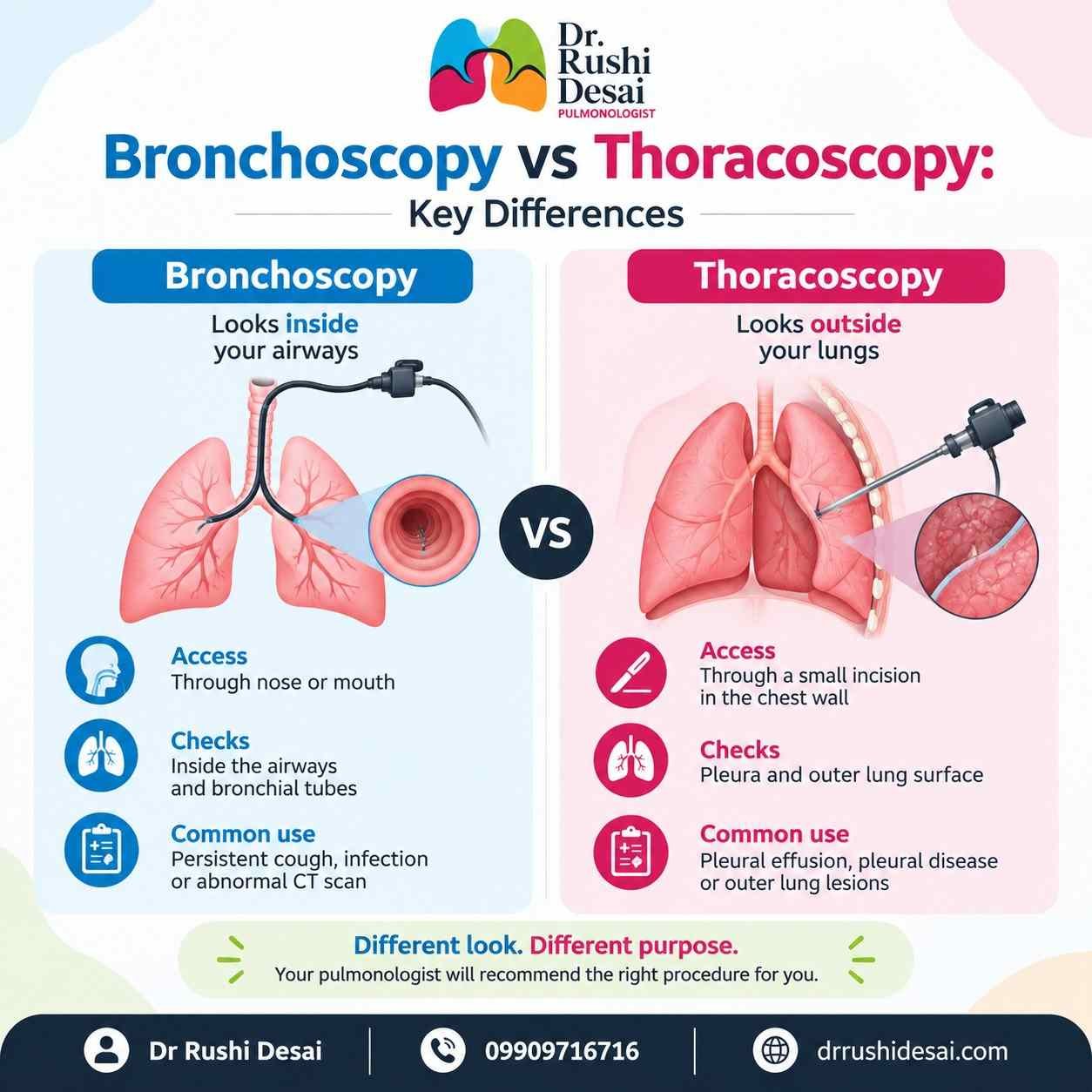
The easiest way to think about it: bronchoscopy looks inside your airways, while thoracoscopy looks outside your lungs, in the chest cavity.
Access point:
Bronchoscopy goes in through your nose or mouth. Thoracoscopy goes in through a small incision in the chest wall.
What it evaluates:
Bronchoscopy examines the inside of the airways and bronchial tubes. Thoracoscopy examines the pleura and the outer lung surface.
Common reasons for the test:
Bronchoscopy is often used for persistent cough, suspected infection, or an abnormal spot seen on a CT scan inside the lung. Thoracoscopy is more often used for pleural effusion, suspected pleural disease, or a lesion on the lung’s outer surface.
Recovery:
Both are generally same-day or short-stay procedures, though thoracoscopy involves a small incision and slightly longer observation afterward.
Neither procedure is “better” than the other. They simply answer different clinical questions, and your pulmonologist will recommend the one that matches what your imaging or symptoms are pointing toward.
Which Procedure Might You Need?
The choice comes down to where the concern is located. If your CT scan or symptoms point to something inside the airway, say, a chronic cough that hasn’t responded to treatment, or a mass visible inside the lung, bronchoscopy is usually the first step. If the concern is fluid around the lung or a growth on the outer lung lining, thoracoscopy gives a more direct view and allows tissue sampling from that area.
Dr. Rushi Desai evaluates your imaging and symptoms first, and only recommends the procedure that’s actually going to answer the clinical question. Sometimes, especially in complex cases involving both airway and pleural involvement, both procedures are used together for a complete picture.
What to Expect During and After the Procedure
Both procedures are done under sedation, so you won’t be fully awake, and both require someone to drive you home afterward. You may have a mild sore throat after bronchoscopy or some soreness near the incision after thoracoscopy. These usually settle within a day or two.
Results from any tissue samples typically take a few days to come back, since they’re sent for lab analysis. In more complex diagnostic cases, such as when interstitial lung disease is suspected, a bronchoscopy with fluid sampling is often just one part of a broader diagnostic workup, alongside imaging and blood tests. Your doctor will walk you through what the results mean and what treatment, if any, comes next.
Conclusion
Bronchoscopy and thoracoscopy aren’t interchangeable. One looks inside your airways, the other looks at your lung surface and chest cavity, and your symptoms and imaging determine which one actually answers your question. If you’ve been told you need either procedure, or you’ve had a cough or chest finding that hasn’t been explained yet, it’s worth getting a clear evaluation before deciding on next steps.
Bronchoscopy Specialist in Ahmedabad
Don’t wait on an unexplained cough or chest finding. Contact us to book a consultation with Dr. Rushi Desai and get a clear diagnosis. Early evaluation makes treatment simpler and recovery faster.
Frequently Asked Questions
Q: Is bronchoscopy painful?
A: Most patients don’t feel pain during the procedure itself because of sedation. A sore throat or mild cough for a day or two afterward is common but manageable.
Q: How long does thoracoscopy recovery take?
A: Most patients are up and moving within a day, with full recovery from the small incision taking about a week. Your doctor will give you specific activity guidelines based on what was done.
Q: Can both procedures be done on the same day?
A: In select complex cases, yes, but this is decided based on your specific imaging findings, not as a routine combination.
Q: Will I be awake during either procedure?
A: No. Both are performed under sedation or light anesthesia, so you won’t be alert or in distress during the test.
Q: Do I need a bronchoscopy or thoracoscopy for a chronic cough?
A: A chronic cough is more commonly evaluated with bronchoscopy first, since it looks directly inside the airway where most cough-related causes originate.
Q: Are these procedures done as day care or do I need to be admitted?
A: Most bronchoscopies are day-care procedures. Thoracoscopy sometimes requires a short overnight stay for observation, depending on what’s found.